Why the Coping Strategies That Got You This Far Are Costing You More in Midlife
They weren’t failures. They just weren’t built for the life you’re carrying now.
Have you ever caught yourself thinking, “I used to be able to do this”?
Not the big things. The ordinary things. Staying on top of the diary. Getting through a week without dropping something important. Keeping your temper on a hard day.
It’s a strange feeling, missing a version of yourself you didn’t realise you were relying on.
This week I did something a bit drastic.
I took a sledgehammer to my business model.
Something about what I'd built didn't feel comfortable anymore. And instead of calmly stepping back and asking which part wasn't working, I did something I suspect a few ADHD women might recognise.
I decided far more needed changing than probably did.
I've since realised there was more going on underneath that reaction than I'd appreciated.
Some things genuinely weren't working for me.
But there was also perfectionism. Imposter syndrome. And that very ADHD tendency towards all-or-nothing thinking.
If something doesn't feel right, change it.
And apparently, in my case, change ALL OF IT. 😂
Except I hadn't got all of it wrong.
There was actually a lot that was right.
I used a sledgehammer when I probably needed a feather.
And that got me thinking about something much bigger: what happens when the ways we've learned to cope stop working as well as they used to?
Key Takeaways
🔑 The coping strategies you built (over-preparing, people-pleasing, endless lists, working late, sheer willpower) weren’t failures. They worked, for a while, and they got you here.
🔑 “I used to be able to do this” isn’t losing your touch. It’s the scaffolding wearing out.
🔑 Midlife changes the maths: more to carry, different capacity, and years of accumulated cost.
🔑 Not every system needs patching. Sometimes it needs rebuilding around who you are now.
🔑 You don’t need to fix anything today. Just notice which strategy is costing you the most.
The Strategies That Got You This Far
Most of us didn’t choose our coping strategies. We built them, out of necessity, usually years before we had any language for why we needed them.
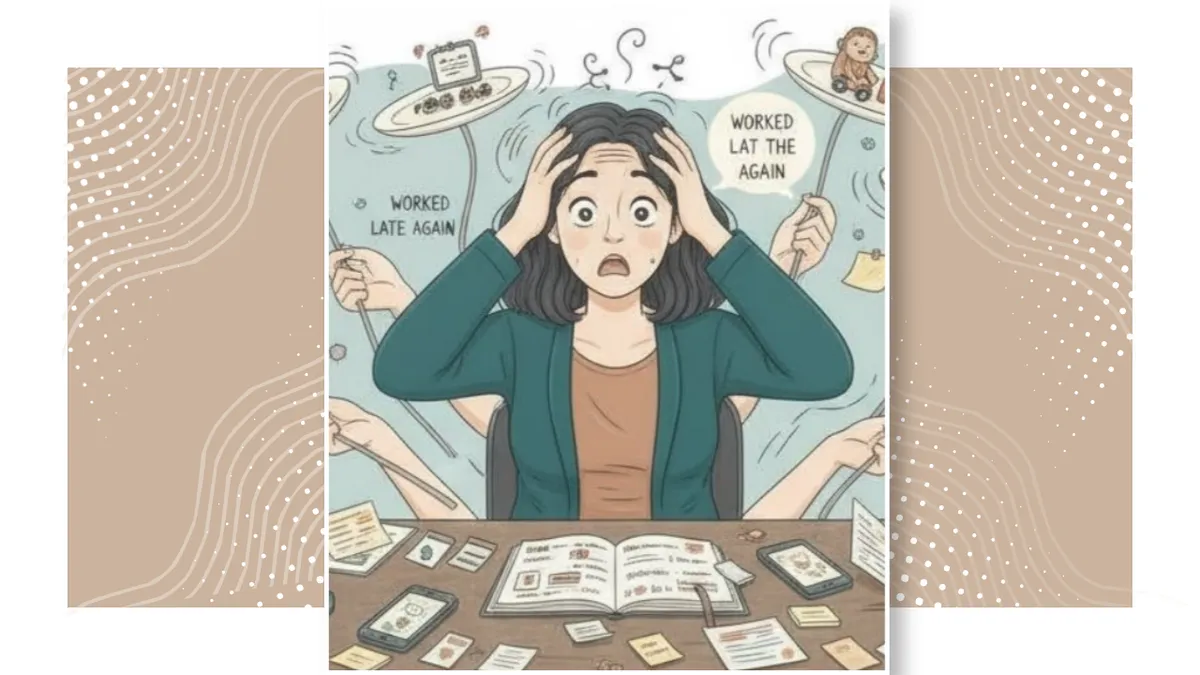
Over-preparing for everything, so nothing catches you out. Saying yes to keep the peace, even when you didn’t want to. Lists on lists on lists. Working late because it’s the only quiet time you get. Willpower, pure and simple, when nothing else was holding. Masking, so nobody clocks how much effort it’s taking.
These strategies worked. That’s worth saying plainly. They weren’t signs that you were failing. They were solutions, built by a resourceful brain trying to get through.
But every strategy has a cost. And for a lot of us, that cost has been building quietly for years.
Why Midlife Changes The Maths
Midlife rarely arrives asking less of you. If anything, it asks more.
There’s more load: work that hasn’t let up, teenagers who need you in new ways, parents who need more support than they used to, and a mental to-do list that never quite clears.
There’s changing capacity: hormonal shifts, disrupted sleep, less resilience in reserve than you used to have.
And there’s the accumulated cost. Those strategies didn’t reset each year. The bill has been running the whole time.
So when the strategies that used to work suddenly stop working, it isn’t a personal failing. The equation has changed. The coping strategies haven’t.
“I Used to Be Able to Do This” Isn’t Losing Your Touch
It can feel like proof that something is wrong with you. That you’re slipping, or getting worse, or somehow less capable than you used to be.
I don’t think that’s what’s happening.
Think of those strategies as scaffolding. They were never meant to hold everything up forever. Scaffolding wears out under sustained load, especially load it was never built to carry. That isn’t a personal failure. It’s what happens to any structure, given enough time and enough weight.
You haven’t got worse. The thing you were leaning on has simply worn thin.
This Week, I Went Too Far the Other Way
I've mentioned my business already, but there's another part of that story that's worth sharing.
I've had a really enlightening conversation with my coach since my metaphorical sledgehammer came out.
And I realised something.
My instinct had been to change everything before I'd properly worked out what actually needed changing.
There were things about the business that genuinely didn't feel right for me.
But there was something else underneath my discomfort too.
Imposter syndrome.
That feeling of “Who am I to do this?”
Perfectionism wasn't far behind.
And once those two got together with my ADHD brain, calmly weighing up the options apparently wasn't on the agenda. 😂
Something didn't feel completely right, so my brain panicked and automatically went:
CHANGE THE PLAN.
Except the whole plan wasn't wrong.
I didn't need to throw everything away and start again.
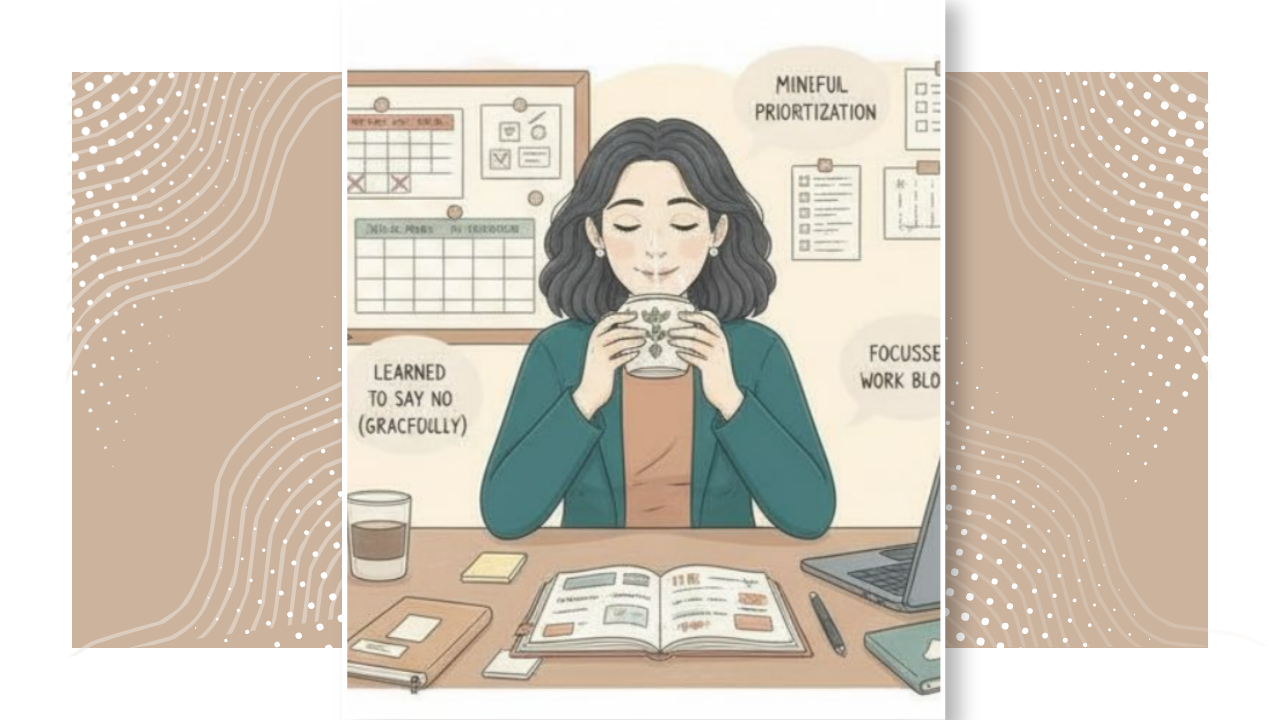
I needed to understand what wasn't working, what still was, and what actually needed to change.
And I wonder how often we do something similar elsewhere in life.
A routine stops working, so we look for a completely new routine.
We fall behind, so we create another system.
The planner gets abandoned, so we buy another planner.
We don't follow the plan perfectly, so we decide the plan has failed.
Sometimes a bigger change really is needed.
But sometimes we need to put the sledgehammer down and ask:
What exactly isn't working for me anymore?
Not Everything Needs Starting Again
When something stops working, it's tempting to assume we need a completely different answer.
Another strategy.
Another routine.
Another system.
Another fresh start.
But maybe there's a step before that.
Get curious about what has actually changed.
Is there more on your plate now?
Is your energy different?
Are you trying to remember too much?
Is something taking far more effort than it used to?
Are you still expecting yourself to manage something in exactly the same way you did ten years ago?
Or is one particular part of the system making everything else harder?
You don't have to overhaul everything today.
And you don't have to keep forcing something that clearly isn't working either.
You can start much smaller:
What's costing me the most right now?
What still works?
What might make this one thing a little easier?
Sometimes that's enough to show you where to start.

D I S C O V E R M Y P R O F I L E →
A Gentler Question to Finish
I’m not going to hand you a five-step plan for replacing every strategy you’ve ever relied on. That would be exactly the kind of pressure this blog is trying to talk you out of.
Instead, one question. Which of my coping strategies is costing me the most right now?
Notice it. You don’t have to fix it yet. Noticing is where changing it starts.
Final Thoughts
I’m not going to pretend I’ve got all of my own coping strategies figured out. I put one down this week. There are others I’m still leaning on, and probably will be for a while yet.
But I'm learning that “this doesn't work for me anymore” isn't a failure. It's information.
And it doesn't automatically mean everything needs changing.
Sometimes the kindest thing you can do is stop trying harder, get curious about what's actually not working, and make the change you need rather than every change you can think of.
Clare 💫
A gentle note: this post combines personal experience with general information about ADHD in midlife. It isn’t intended to diagnose or replace professional medical advice. If any of this resonates with you, a conversation with your GP could be a helpful first step.
Want More Support?
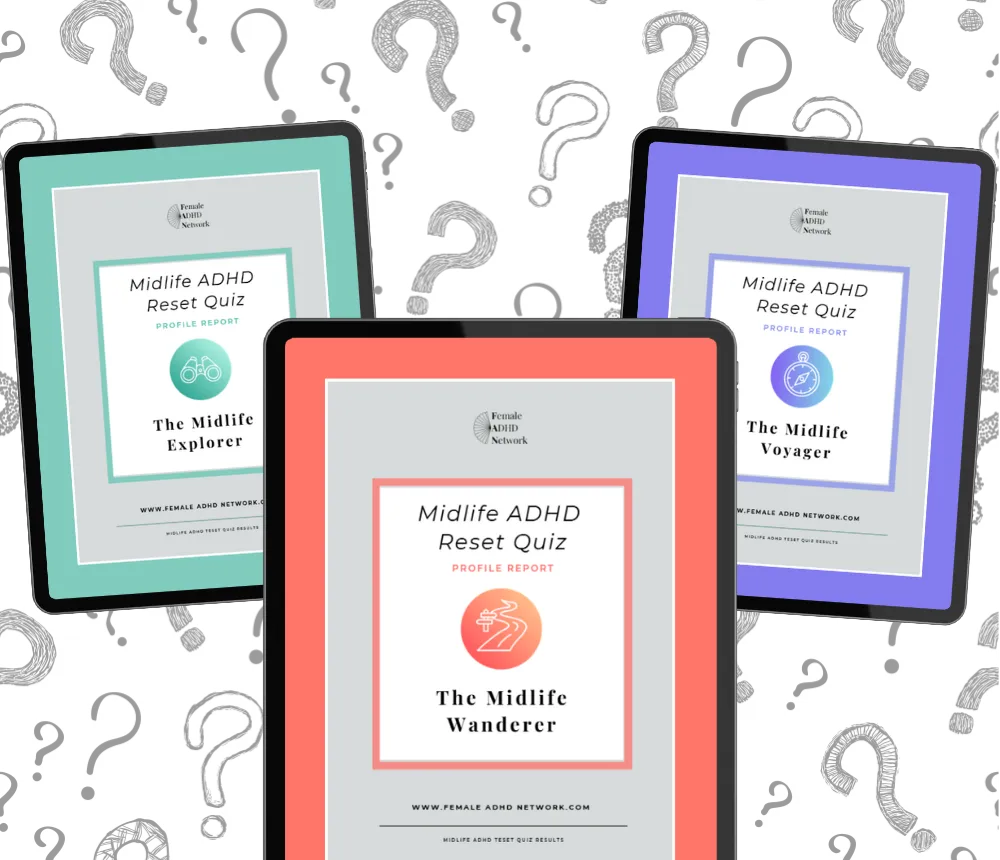
Not sure where you’re starting from? The free MAP Quiz shows you your profile, Wanderer, Explorer or Voyager, in under 5 minutes. Take the quiz →
ADHD Coping Strategies Midlife ADHD