Why Traditional Time Management Doesn't Work for Women with ADHD in Midlife (And What to Do Instead)
Do you ever wonder why one day you can fly through emails, remember the birthday card, book the appointments, make dinner and even tackle that job you've been putting off for weeks.
The next...
Replying to a single email feels impossible. If you've ever wondered why that happens, you're not imagining it—and you're certainly not alone.
"You're not lacking discipline. You've just been trying to run an ADHD brain on a schedule that assumes energy shows up on demand."
In this article, I'll explain why it happens, why it affects women with ADHD especially hard in midlife, the signs your energy is already running low, why traditional time management was never designed for an ADHD brain, and a kinder, more sustainable way to build your week instead.
Key Takeaways
🔑 ADHD affects far more than attention. Executive functioning and dopamine regulation also influence energy, motivation and emotional regulation, which is why your capacity can fluctuate so much from one day to the next.
🔑 Midlife compounds this further. Hormonal shifts, caregiving responsibilities, years of masking and the invisible mental load often converge at exactly the same time.
🔑 Traditional time management assumes steady energy. ADHD brains don't work like that, so when the system falls apart, it's the generic productivity advice that's failed—not you.
🔑 Energy management means working with your natural peaks and troughs instead of constantly fighting against them.
🔑 This isn't about becoming more disciplined. It's about building a life you want that works with the brain you actually have.
Why It Affects Women with ADHD (Especially In Midlife)
One of the biggest misconceptions about ADHD is that it's simply a condition that affects attention. It isn't.
ADHD is often described as a condition of self-regulation rather than simply one of attention. That means it affects the brain's ability to regulate attention, motivation, emotions, energy, memory and executive functioning. Attention is only one part of a much bigger picture.
Executive functioning is responsible for the mental skills that help us plan, organise, prioritise, start tasks, switch between them, manage time, regulate emotions and follow things through.
Differences in dopamine regulation also mean that motivation and energy don't arrive on demand. An interesting task can feel energising. A mundane task can feel exhausting, regardless of how long either one actually takes.
Because those same systems are involved in planning, decision-making and emotional regulation, mental fatigue builds much faster than most people realise.
Traditional time management assumes a steady supply of focus and energy but generic productivity systems simply weren't designed with an ADHD brain in mind.
Of course, we all have appointments to keep, meetings to attend and deadlines to meet.
The difference isn't whether we manage our time — it's how we plan the parts of our day that we can control to protect our energy.
It wasn't until I experienced burnout myself that I realised I'd spent years trying to manage my time, when what I really needed to understand was my capacity.
The Invisible Energy Nobody Sees
That's why so many women with ADHD reach midlife wondering why they feel permanently exhausted.
It's not because you're lazy.
Or unmotivated.
In fact, it's usually the opposite.
For decades you've probably been working twice as hard behind the scenes simply to appear "fine."
No one sees the invisible energy that goes into remembering birthdays because you've forgotten them before.
Double-checking you've locked the door.
Rehearsing difficult conversations.
Trying not to interrupt.
Masking your overwhelm.
Holding everything together. None of those things appear on a to-do list but they all consume invisible energy.
And it all adds up.
Then Midlife Arrives
Just when you feel as though you've finally figured life out... midlife quietly changes the rules.
Midlife arrives and pulls the rug from under your feet.
Hormonal changes affect oestrogen, which plays an important role in dopamine regulation. For women with ADHD, that can make fluctuating energy, focus and emotional regulation feel even more noticeable.
At the same time, many of us find ourselves in what I call The Midlife Sandwich.
Supporting ageing parents.
Supporting children or teenagers.
Managing increasingly demanding careers.
Holding together the invisible mental load that no one else notices.
And all the while, relying on coping strategies that have been working overtime for decades.
Eventually, something has to give.
Not because you've become less capable.
Because demand has quietly outpaced capacity.
Why Generic Time Management Advice Doesn't Work for ADHD
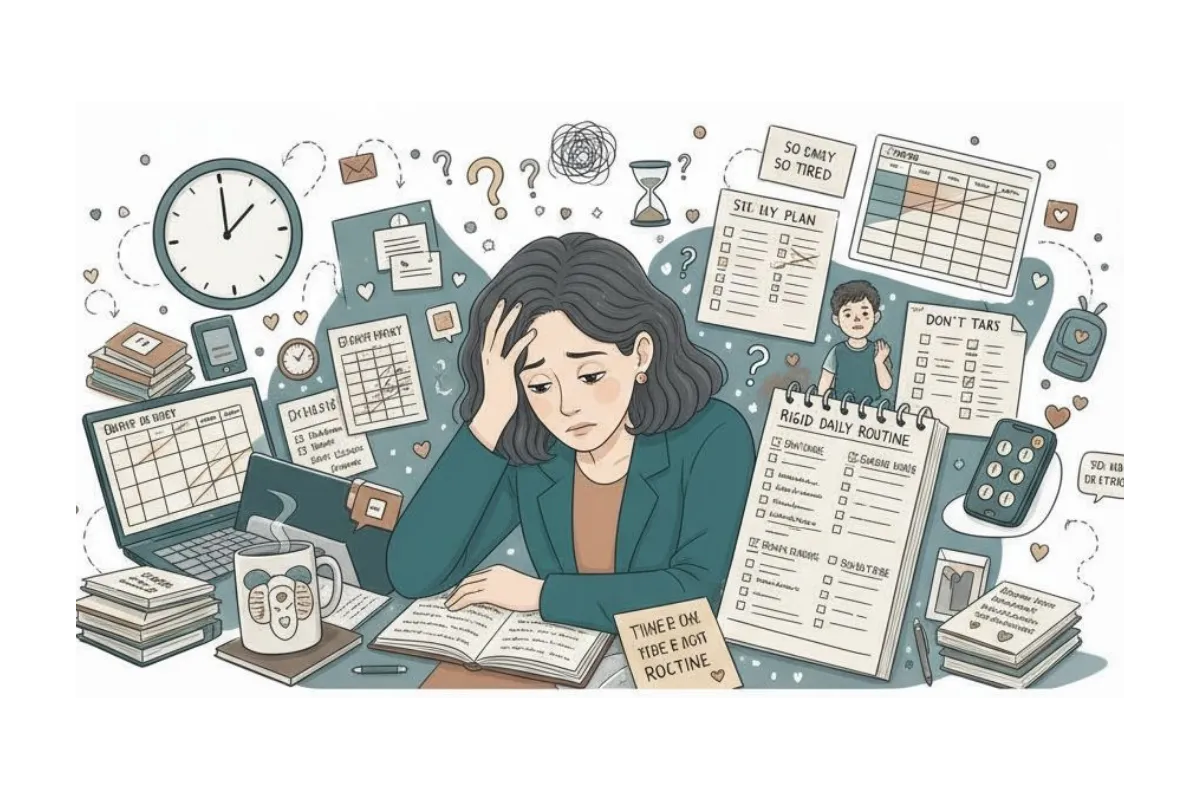
For years I thought I simply wasn't very good at managing my time. So I did what so many of us do.
I bought another planner.
Downloaded another app.
Started another beautifully colour-coded system.
It usually lasted a few days. Then I'd fall behind, feel guilty and convince myself I simply needed to try harder.
Sound familiar? What I've come to realise is... the problem was never me.
And it probably isn't you either.
Most productivity advice is built on the assumption that every hour contains roughly the same amount of focus, motivation and mental energy.
The trouble is, generic productivity systems weren't designed with an ADHD brain in mind – especially for women navigating midlife.
That doesn't mean time doesn't matter.
We all have appointments to keep, meetings to attend and deadlines to meet.
The difference is how we plan the parts of our day that we can control, working with our energy instead of expecting every hour to feel the same.
Some days you'll have plenty of capacity.
Other days, your brain has already spent most of its energy long before you sit down to begin.
Trying to force an ADHD brain into a rigid schedule often creates more shame than success.
Because when the system doesn't work, it's easy to believe you've failed.
You haven't.
It's just that generic productivity advice wasn't designed for your ADHD brain. It failed you — not the other way around.
Signs Your Energy Levels May Be Running Low
This looks different for everyone, but here are some common signs your energy reserves may already be depleted:
Your brain feels full. Concentrating becomes harder, decision-making slows down and brain fog creeps in.
Everything suddenly feels too much. You're more irritable, emotionally sensitive or easily overwhelmed by things that wouldn't normally bother you.
You're tired... all the time. Even after sleeping, you don't feel properly restored.
Your body starts talking too. Aches, tension, headaches or feeling physically drained become more frequent.
You don't bounce back the way you used to. A busy day, a social event or a stressful week seems to take much longer to recover from.
If you recognise yourself in some of these, please don't see them as character flaws. They're your brain's way of saying:
"I'm reaching capacity." That's your cue to protect your energy, not ignore it. And to remember...
Rest isn't a reward you earn once everything is finished. It's the scaffolding that ADHD brains need to stay well.
Curious to know what your own energy pattern might look like?
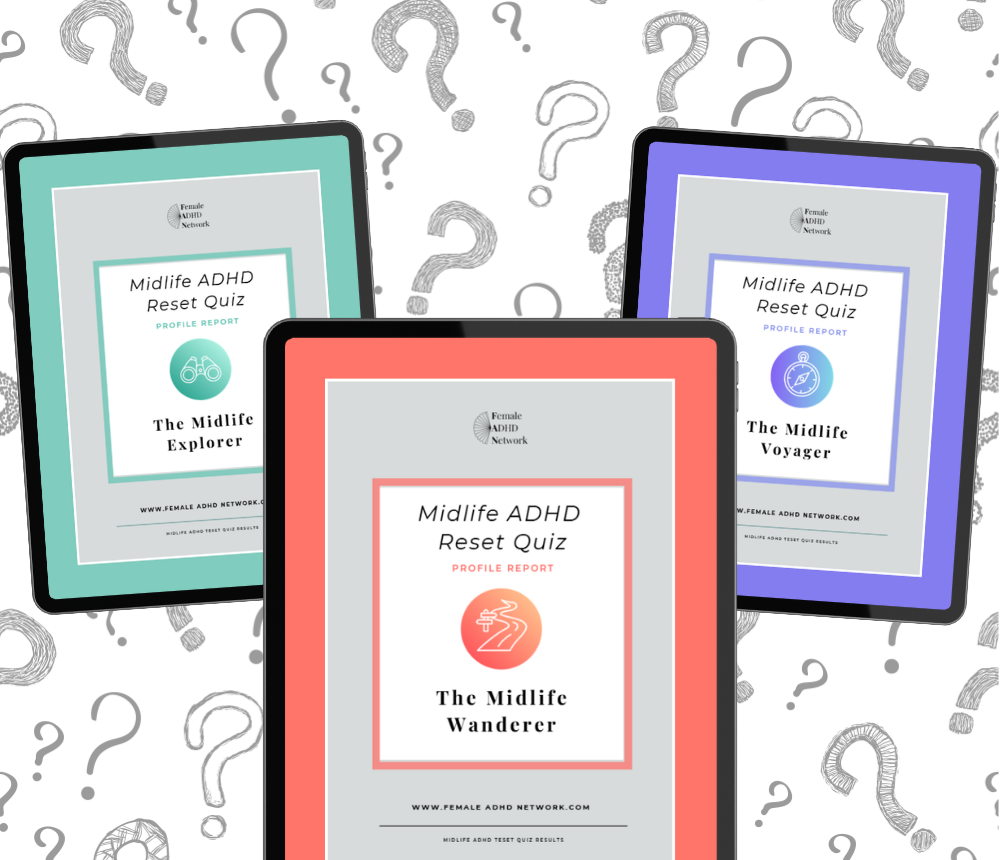
The free MAP Quiz takes just five minutes and helps you understand your Midlife ADHD Profile, along with ADHD-friendly next steps that fit where you are right now.
A More ADHD-Friendly Approach
For the parts of your day that are flexible, try working with your natural rhythms instead of against them.
Think of it like sailing with the wind instead of rowing upstream without a paddle.
Both can get you where you want to go. Only one works with the conditions rather than constantly fighting against them.
Your energy naturally moves in peaks and troughs. The goal isn't to eliminate the troughs.
It's to stop expecting yourself to live as though they don't exist.
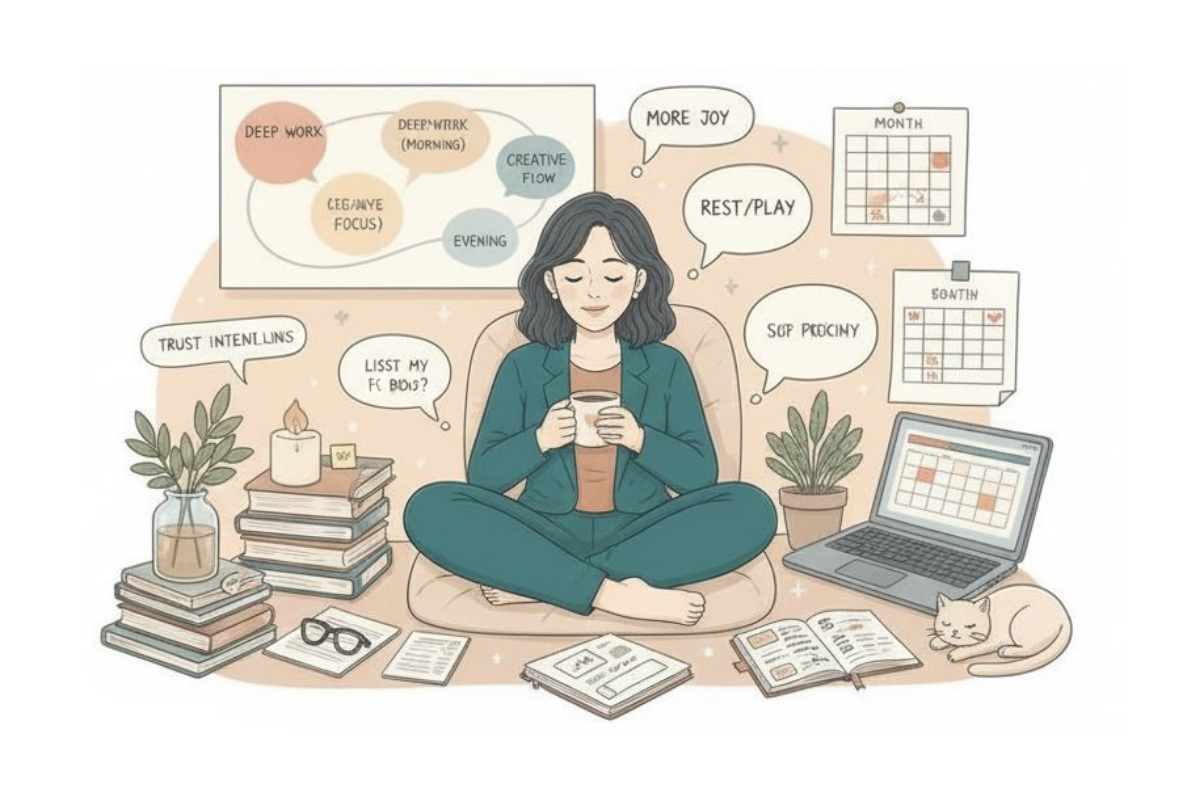
I've learned that my best thinking usually happens in the morning, so that's where I schedule creative work. Emails, admin and lighter tasks come later when my focus naturally starts to fade.
That rhythm won't look the same for everyone.
The important thing isn't copying someone else's routine.
It's discovering your own. Instead of asking:
"When will I do this?"
Try asking:
"How do I feel when I sit down to do it?"
That one question changes everything.
A Few Gentle Ways to Start
Start getting familiar with your own energetic peaks and troughs, and then start to plan your days around these.
Match demanding tasks to your highest-energy windows.
Build short recovery breaks into your day before you reach empty.
Use lower-energy periods for lighter tasks—or simply rest.
Stay flexible. If your energy changes, let your plan change too.
Final Thoughts
I still use a diary.
I still have appointments.
I still rely on reminders.
But I've stopped expecting every free hour in my diary to contain the same amount of focus, creativity and mental energy.
What I actually needed was permission to stop measuring myself by someone else's definition of productivity and consistency.
Instead, showing up for myself in a way that honours my energy and current capacity. When your ADHD brain says "not now", there's just no point forcing it.
That means allowing yourself to walk away from the screen and go for a walk instead, or saying no to the thing you know will sap the little energy you have left.
Some days you'll have energy for the big things. Some days you'll only have energy for the basics and that's OK.
Remember that it's not you that needs fixing. It's the systems that were never designed for the way your brain works.
Once you understand this, and start to work with it instead ... is when midlife starts to feel a little lighter.
I'd love to know: When does your brain feel at its best? Morning? Afternoon? Late evening? Or does it change every day? Let me know in the comments.
Clare 💚
This post combines personal experience with general information about ADHD in midlife. It isn't intended to diagnose or replace professional medical advice. If any of this resonates with you, a conversation with your GP could be a helpful first step.
Want More Support?
Curious what your own peaks and troughs actually look like?
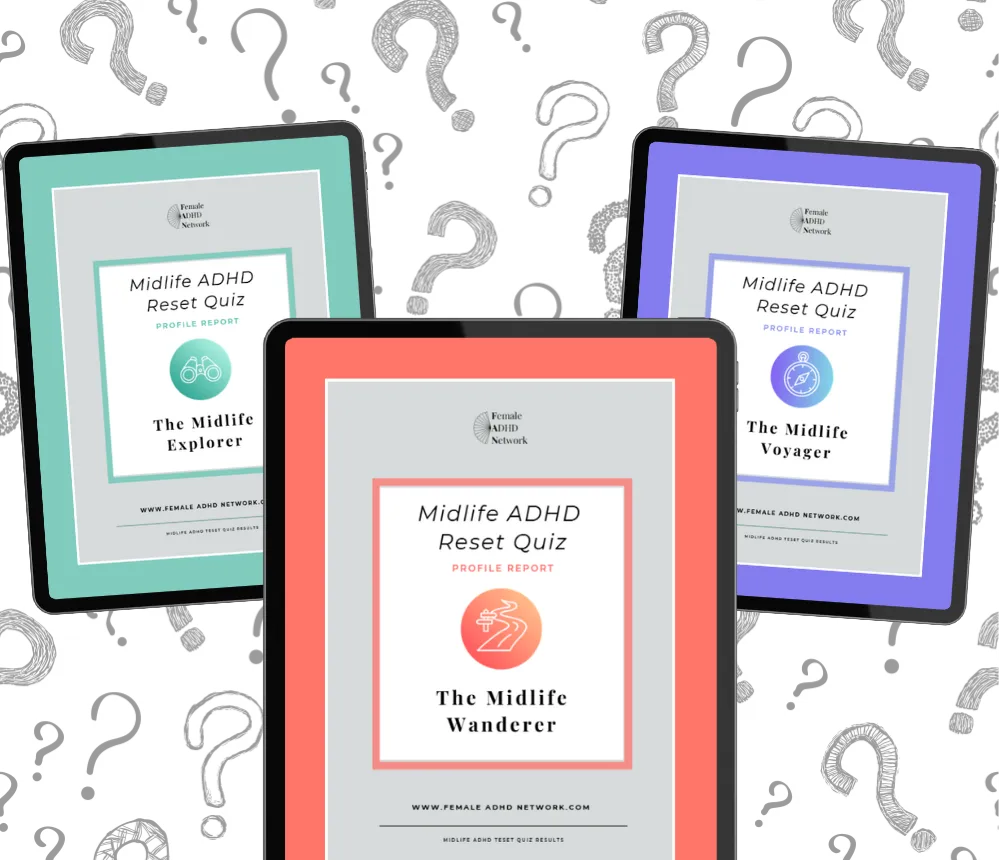
The free Midlife ADHD MAP Quiz helps you discover whether you're currently more of a Wanderer, Explorer or Voyager, along with personalised ADHD-friendly insights and next steps. Take the quiz →
And if you're ready to move beyond understanding your ADHD and begin building a life that genuinely works with it, I'd love to welcome you into the Midlife ADHD Reset, where we explore these ideas in much more depth and help you turn them into sustainable, compassionate strategies for everyday life. Learn more →