Why Midlife Feels Harder for Women with ADHD (It’s More Than Brain Fog)
Many women, including myself, reach midlife expecting it to get easier — and instead find it harder than ever, without knowing why.
Overwhelmed, exhausted, and increasingly anxious, for many this really is more than just brain fog. It’s the hidden struggle of ADHD in midlife.
So, if you've been wondering whether your struggles are really "just menopause" or whether something else might be going on, you're not alone. This article may help you make sense of why.
This post covers three important points:
What ADHD actually is
Why it shows up differently in women
Why midlife turns up the volume on all of it
1. What is ADHD?
ADHD is a neurodevelopmental condition, and not just occasional distractibility or restlessness.
It affects the brain’s executive functioning — the cognitive skills that allow you to plan, organise, start and follow through on tasks, manage time, control impulses, and regulate emotions.
Building awareness and understanding about how ADHD affects these skills is the first step towards improving them, building self-trust and being able to move forward with more confidence.
2. How ADHD looks different in women
ADHD research was built primarily on studies of young boys — the traditional stereotype we grew up hearing about, who demonstrated more external, hyperactive symptoms, were often labelled “naughty” or “disruptive,” and were three times more likely to be diagnosed than girls.
Girls, on the other hand, were more likely to show inattentive symptoms: daydreaming, difficulty concentrating and following through, forgetfulness, always late, and told “if only they could try harder.”
As a result, a whole generation of women have either been misdiagnosed with anxiety or depression, or missed entirely. Many women with ADHD are being diagnosed later in life, often finding out either because a child has been diagnosed or because the demands of daily life have finally caught up with them — both of these combined were the reason the penny dropped for me.
Over time, we’ve learned to mask our difficulties instead — blending in, overcompensating, or striving for perfection — leading to shame, anxiety and a feeling of never being good enough.
Which brings me to the third point, and the most significant reason I wrote this post.
3. Why midlife turns the volume up
Keeping up that mask for decades takes its toll — burnout, low mood, or feeling disconnected from who you really are. On top of this, three significant things tend to arrive together, and combined, they make a perfect ‘midlife’ storm and explain the reason it feels so much harder:
🤍Hormonal changes
Can also intensify ADHD symptoms across the lifespan — including puberty and pregnancy.
In midlife, perimenopause and menopause directly affect oestrogen levels — and oestrogen plays a significant role in dopamine regulation — the very chemical the ADHD brain already runs low on.
It is central to attention, motivation, and emotional regulation. When oestrogen drops, ADHD symptoms get worse, sometimes dramatically — impacting mood, working memory, focus, sleep and motivation.
This goes some way to explaining the wave of women in midlife who either suspect ADHD or receive a diagnosis around now. Understanding the link can be life-changing, because it helps reframe challenges you might otherwise see as personal failings.
If this is also you, you need to know: this is real, it is physiological, and there are options. Hormone therapy, ADHD medication adjustments, and targeted support strategies can all help. But the first step is understanding what’s actually happening.
💡My Lightbulb Moment
I was on long-term absence from work with burnout. I felt like I was going crazy and didn’t know what on earth was going on — but I knew it had to be more than brain fog.
I found the connection myself, through my own research, and to say it was a lightbulb moment is an understatement.
This left me with mixed emotions. My first reaction was anger — that ADHD and perimenopause hadn’t been more fully explored as possible explanations for what I was experiencing. Then came an enormous feeling of relief and validation: I wasn’t losing my mind.
Knowing this was life-changing. It let me take back control of my mind and my life, by seeking the treatment I actually needed.
🤍The Midlife Sandwich
Women are having children later, and parents are living longer — which means you may be balancing the needs of both at the same time. Add to this the midlife convergence in full effect: societal expectations to be everything to everyone, while holding down a career or business that runs on your masking and may no longer be the right fit.
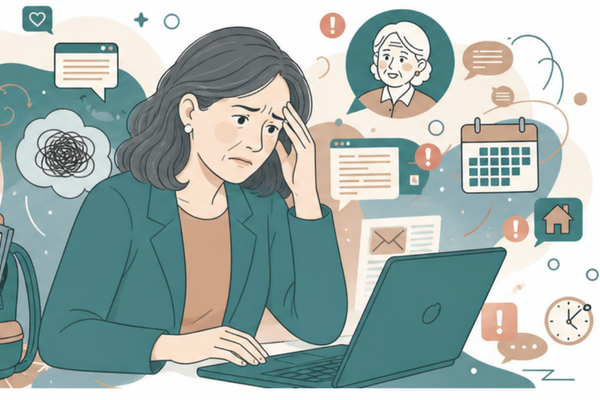
On top of that, there’s the invisible load you carry — the constant mental tally of appointments, forms, birthdays, routines — compounded by the emotional labour of caregiving, smoothing over conflicts, and making sure everyone feels supported, all while comparing yourself to others and wondering what’s wrong with you.
Many women with ADHD appear fine to others, but what they don’t see is the chronic over-preparing, organising and compensating just to stay afloat. It’s exhausting, working so much harder to achieve the same output others seem to manage with ease. You might catch yourself saying, “If only I could just get organised, stay on top of things, or follow through.”
🤍Coping strategies that no longer hold
Many women with ADHD have unknowingly created their own systems and strategies to navigate the challenges they face, whether they realise they’re ADHD-related or not.
On the surface, it may look like you’re functioning. But underneath, you’re masking, and while you may have managed to get away with it for decades, the coping strategies you’ve always relied on start to crumble — and it can feel like the ground has shifted beneath you. What’s easy to miss is that this isn’t a personal failing: everything has simply converged in midlife to create the perfect storm.
How to make midlife a little easier?
First of all, know that you are not alone. You’re in the right place.
A midlife ADHD diagnosis is more than a label — and it isn’t about trying to be more productive or finally “getting your life together.” It’s presents an exciting opportunity to reinvent yourself, maybe shift career, go travelling or set up that business you dreamt of.
You're not lazy or broken. You're someone who has implemented your own coping strategies over the decades to mitigate invisible challenges and you should celebrate that.
The good news is that once you get a better understanding of ADHD, you can start to reframe your past, present and future through a more informed, compassionate ADHD lens. It’s exactly what I did — and it’s why I created the Female ADHD Network, to help other women with ADHD get the support I couldn’t find when I needed it.
Key takeaways
🔑 ADHD often presents differently in women than in the boys studied in early ADHD research.
🔑 Many women spend years masking symptoms and are consequently missed or misdiagnosed.
🔑 Perimenopause and menopause can significantly intensify ADHD symptoms.
🔑 Midlife pressures can overwhelm coping strategies that previously worked well.
🔑 Understanding ADHD through a compassionate lens can be life-changing.
I hope this post has helped you understand more about ADHD and that it’s not that you got worse at life — it’s that demand overtook capacity in midlife, all at once. That’s a very different story from the one you’ve probably been telling yourself. It’s the story I told myself for years, too.
I’d love to know: your own 💡lightbulb moment, if and how ADHD impacts you in midlife or anything else you'd like to share in the comments.
Clare 💫
A gentle note: this post combines personal experience with general information about ADHD in midlife. It isn't intended to diagnose or replace professional medical advice. If any of this resonates with you, a conversation with your GP could be a helpful first step.
Want more support?
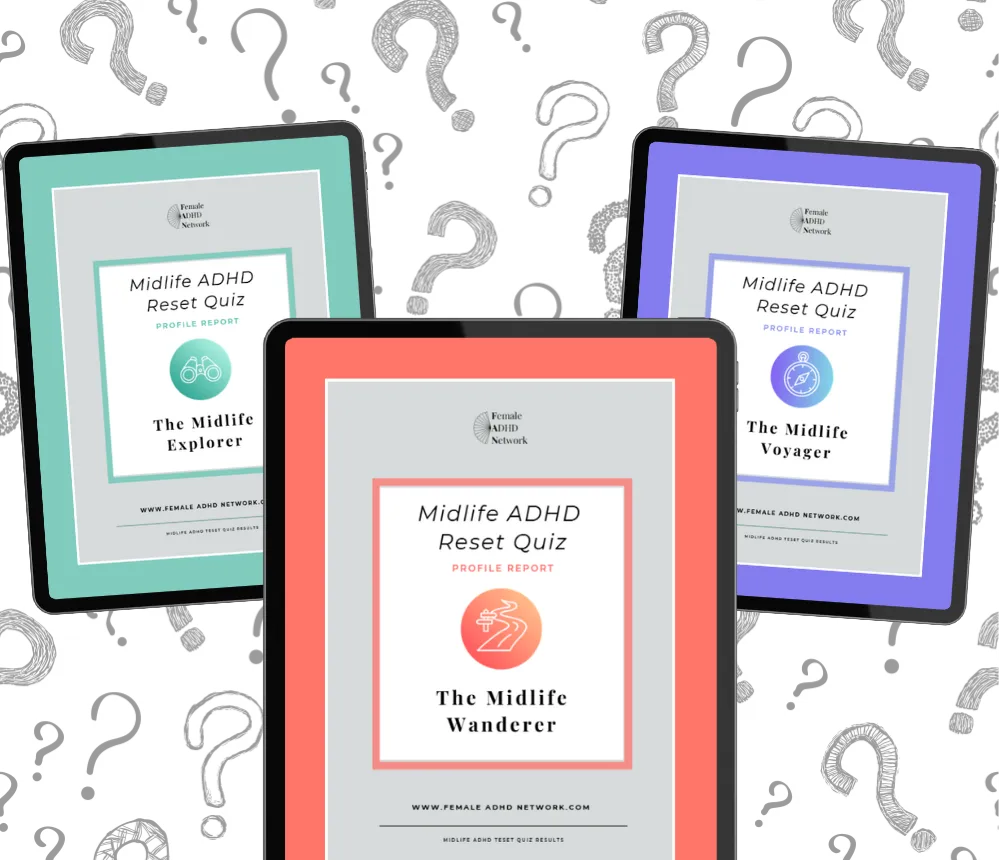
Not sure where you're starting from? The free MAP Quiz shows you your profile — Wanderer, Explorer or Voyager — in under 5 minutes. Take the quiz
Ready to create a midlife that finally feels like you? Click here to learn more about my Midlife ADHD Reset course.