The Invisible Load of ADHD in Midlife: Why You’re So Tired Even When It Looks Like You’re Coping
You’re making dinner, but your brain isn’t making dinner.
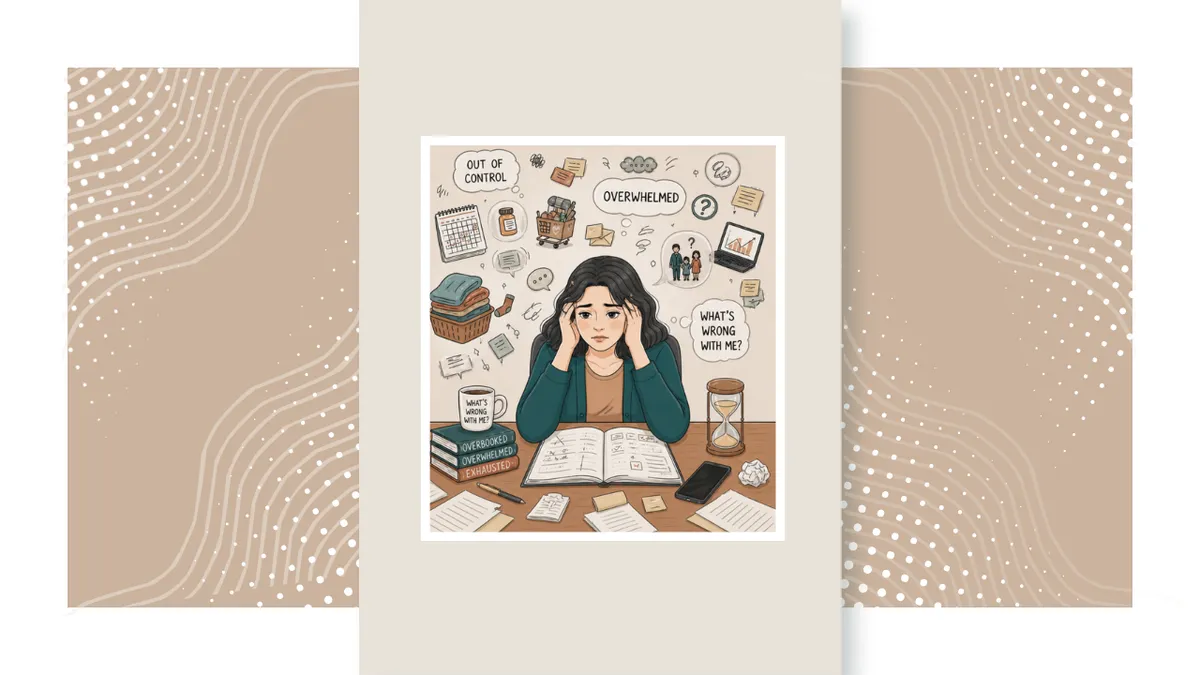
It’s remembering the prescription you need to collect. The message you still haven’t replied to. The appointment you mustn’t forget. The washing that’s been sitting in the machine. The form you’ve been meaning to fill in. Whether everyone else has what they need tomorrow.
Then somebody asks, “Are you okay?”
And you say, “Fine. Just tired.”
Sound familiar?
Sometimes the exhaustion of midlife isn’t coming from one enormous thing. It’s the weight of a hundred small things — many of which nobody else can see.
And when you have ADHD, carrying all of that in your head can take far more effort than it looks from the outside. This isn't really a blog about becoming better at coping. It's about recognising how much you're already carrying, why ADHD can make that invisible load feel even heavier in midlife, and why the answer might not be asking more of yourself.
It might be noticing the load first.
Key Takeaways
🔑 The invisible load isn't just what you're doing — it's everything you're remembering, anticipating, organising and worrying about behind the scenes.
🔑 ADHD can make that mental juggling more demanding, particularly when working memory, planning, task switching and emotional regulation are involved.
🔑 Midlife can add another layer as hormonal changes, family responsibilities, work, relationships and changing roles collide.
🔑 Looking capable doesn't mean you're not struggling. Years of masking, people-pleasing and overcompensating can hide just how much effort coping takes.
🔑 Before asking “How can I cope better?”, try asking “What am I actually asking myself to cope with?”
The 'load' isn’t just what you’re actually 'doing'
We tend to count the visible jobs: make dinner, book the appointment, pay the bill, reply to the email, organise the birthday, help somebody with a problem.
But there is another layer underneath.
You have to notice the thing needs doing. Remember it. Decide when to do it. Work out where it fits. Start it. Switch away from whatever you were already doing. Remember to come back to it. Adapt when somebody changes the plan.
And while you’re doing that, you’re trying not to lose the other things you were holding in your head.
That’s the invisible load — the remembering, anticipating, organising, worrying and emotional effort that sits behind everyday life.
Why ADHD can make that load feel even heavier
Many of those invisible tasks rely on executive functions: the brain processes involved in planning, prioritising, holding information in working memory, starting tasks, switching attention and regulating emotions.
ADHD can make those processes less reliable. That doesn’t mean you’re incapable. It means ordinary life can require a surprising amount of conscious effort.
You’re not only remembering the appointment. You may also be creating three reminders, leaving something by the door, repeating it to yourself all morning — and still worrying you’ll forget it.
From the outside, the job got done.
Nobody sees the extra scaffolding it took to get there.
Then midlife adds another layer
Midlife can be a perfect storm for women with ADHD.
Work may still be demanding. Children may need you in completely different ways than they did when they were small. Parents may need more support. Relationships, homes, finances and health still need attention. And somewhere in the middle of all of that, hormonal change can coincide with changes in concentration, memory, sleep and emotional regulation — making existing ADHD challenges feel more noticeable for some women.
This is one reason so many women reach their forties and fifties saying, “I used to cope. Why can’t I cope now?”
The ADHD may not be new. The load has changed. Your capacity may have changed. And the strategies that helped you hold everything together may simply be costing too much now.
Breaking the cycle starts with recognising your invisible load.
The MAP Quiz takes five minutes and shows you your own Midlife ADHD Profile, plus next steps that actually fit where you are right now.
The capable one nobody needs to worry about
There’s another part of this that I know very well.
Many of us got incredibly good at looking capable.
We over-prepared. We worked harder. We people-pleased. We tried to get everything right. We became the reliable one — the woman who sorted things, remembered things and said, “It’s fine, I’ll do it.”
On the outside, I looked like I was holding everything together. Inside, I was exhausted.
I masked my struggles for years, pushing through with willpower and self-criticism. And because I appeared to be coping, it was easy — for other people and for me — to underestimate how much effort coping was actually taking.
That gap between looking okay and feeling overwhelmed can become exhausting in its own right.
And this is where boundaries come in
Last week we talked about why boundaries can feel so difficult — particularly when people-pleasing, fear of disappointing people and years of being the dependable one are part of the picture.
But perhaps there’s another question worth asking.
If saying no feels difficult… what have you been saying yes to?
Not just the obvious commitments. The mental jobs. The emotional jobs. The things you automatically notice, remember or take responsibility for because that’s what you’ve always done.
It's not that you need to become more resilient
Before asking, “How can I cope better?” it might be worth asking:
“What am I actually asking myself to cope with?”
When life feels unmanageable, our first instinct is often to turn the problem back onto ourselves.
I need to be more organised.
I need to manage my time better.
I need to stop being so emotional.
I need to get on top of things.
But what if the starting point isn’t fixing your ability to cope?
What if it’s noticing the load?
Because sometimes you don’t need another strategy for squeezing more into the day.
You need permission to recognise that there is already a lot in it.
A gentle place to start
I’m not going to give you a ten-step mental-load audit. That would be a slightly ridiculous way to help an overwhelmed ADHD brain. 😄
Instead, try one question:
What am I carrying right now that nobody else can see?
You don’t have to solve it today. Don’t even turn it into another to-do list.
Just notice.
Maybe it’s remembering everything for everybody. Maybe it’s worrying about an ageing parent. Maybe it’s a work problem that follows you home. Maybe it’s keeping the peace. Maybe it’s the constant background fear that you’ve forgotten something.
Recognition matters, because it changes the question from:
“What’s wrong with me?”
to:
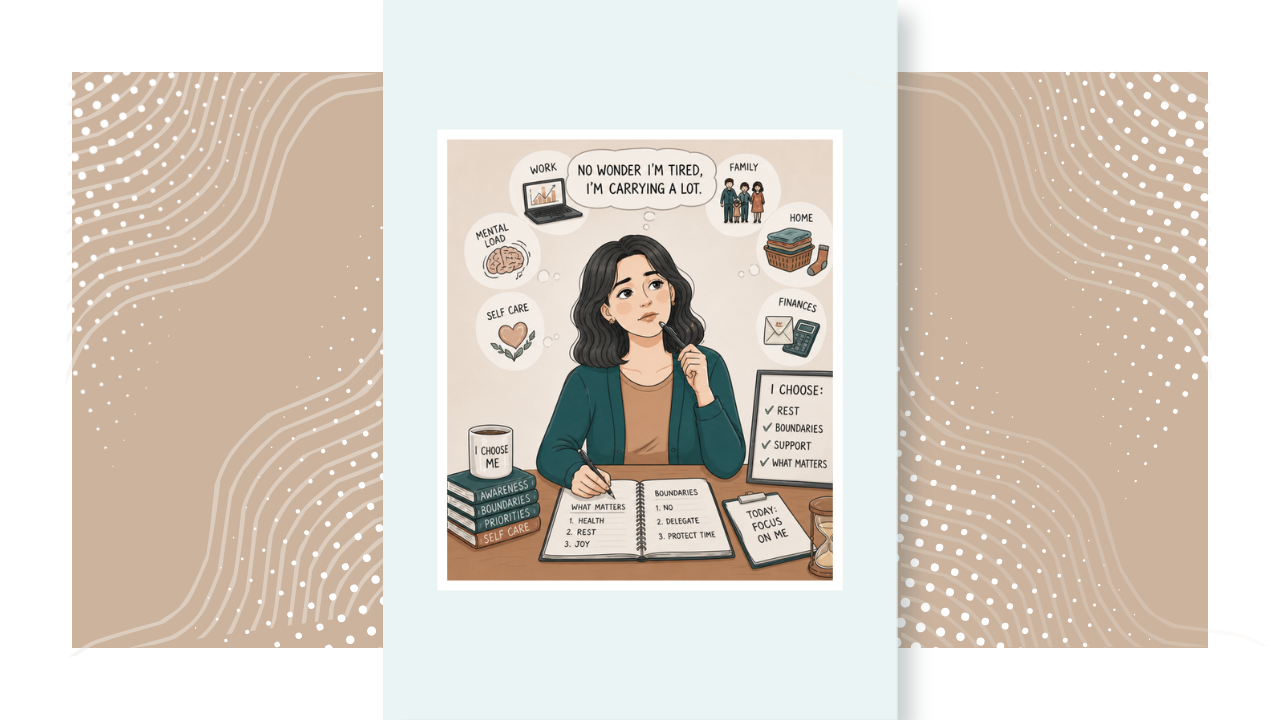
“No wonder I’m tired.”
Clare 💫
A gentle note: this post combines personal experience with general information about ADHD in midlife. It isn't intended to diagnose or replace professional medical advice. If any of this resonates with you, a conversation with your GP could be a helpful first step.
Want a little more clarity?
If you’ve reached midlife wondering why things that used to feel manageable suddenly don’t, my free MAP Quiz can help you take stock of where you are right now.
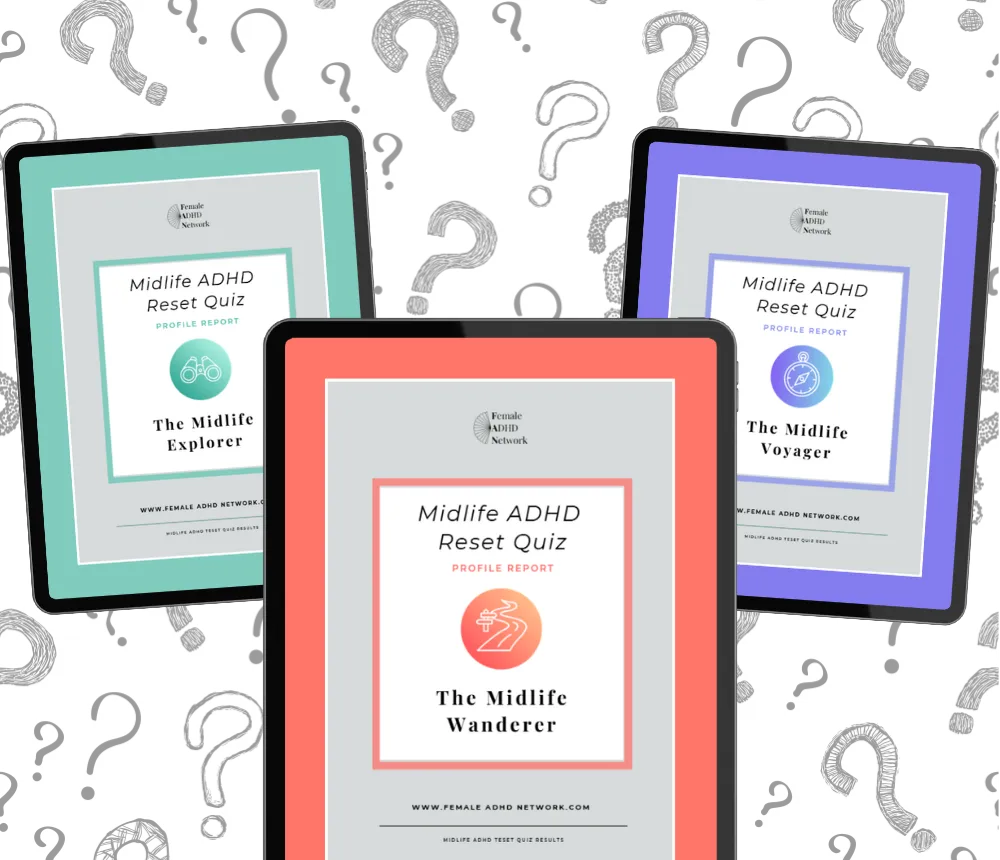
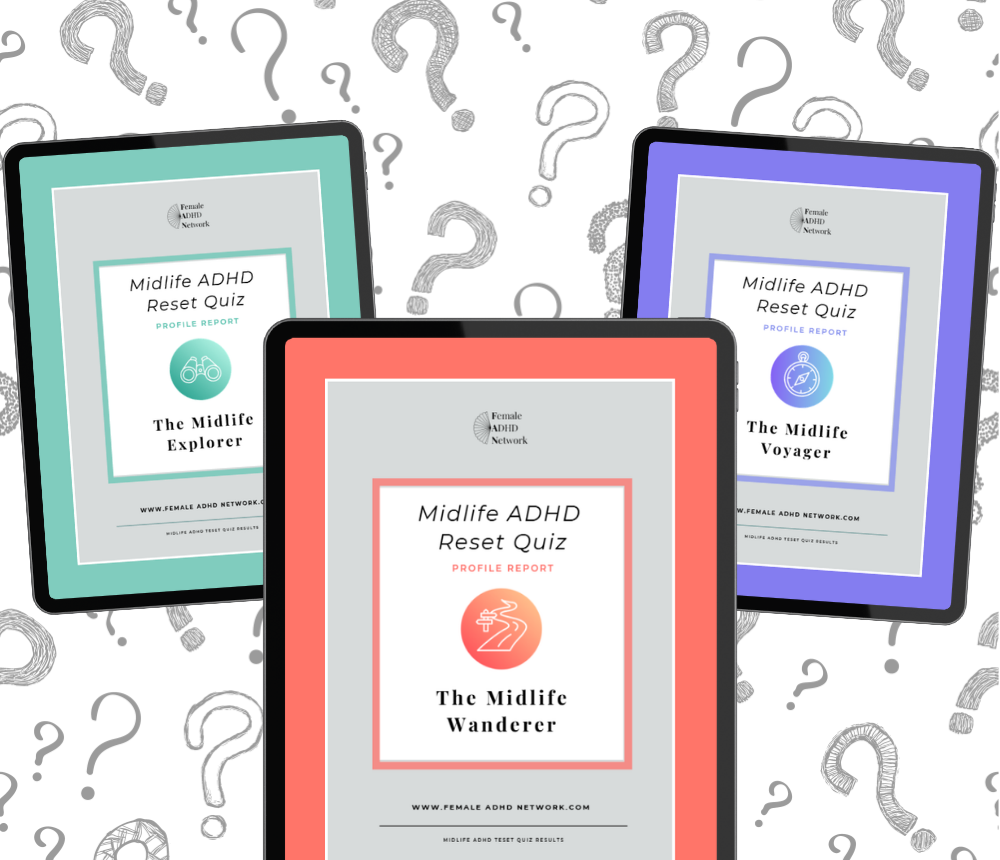
It isn’t another list of things you “should” be doing. It gives you your Midlife ADHD Profile — Wanderer, Explorer or Voyager — and helps you understand where you may need more support next.
→ Take the free MAP Quiz: [MAP Quiz Link]
Ready to break the cycle for good and create a midlife that finally feels like you?
→ Learn more about my Midlife ADHD Reset Course: [Midlife ADHD Reset Course]