Breaking The Burnout Cycle: Why Midlife Women With ADHD Are More Susceptible
Are you a woman with ADHD in midlife who suddenly feels like you're running on empty?
Your brain won't switch off.
You're exhausted in a way sleep doesn't fix.
You're snapping at people you love and wondering whether it's more than just brain fog.
If so...you're in the right place.
Overwhelm, stress, or even worse, burnout, is not a personal failing.
It's what happens when demand inevitably outpaces the capabilities of women with ADHD in midlife.
In this article I'll explain:
what burnout actually is
why women with ADHD are more susceptible in midlife
what genuinely helps you break the cycle.
Key Takeaways
🔑 Burnout is more than just a 'bad week'. It is physical and mental exhaustion caused by prolonged, unrelieved stress. It builds quietly over time until one day you realise you're surviving rather than living.
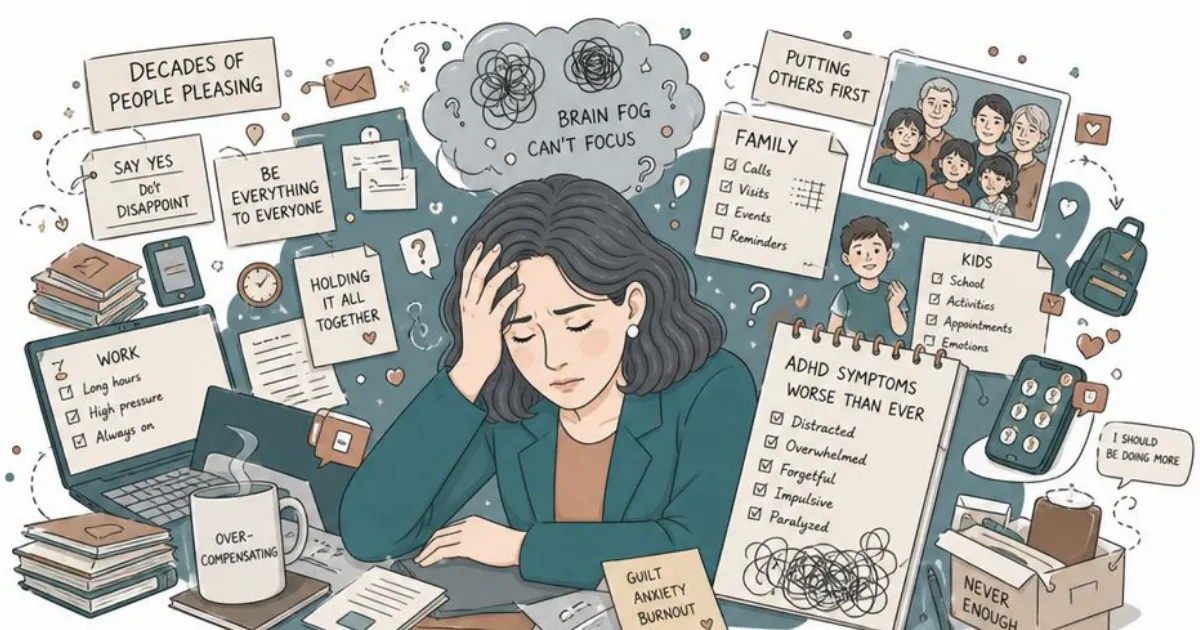
🔑 Anyone can experience burnout but women with ADHD are more susceptible after decades of people pleasing, masking and overcompensating
🔑 Midlife adds hormonal shifts and extra caregiving load on top of coping strategies that are finally starting to crumble.
🔑 Common signs include chronic fatigue, a shorter fuse, heightened emotional sensitivity, and difficulty starting even simple tasks.
🔑 Breaking the cycle comes down to learning your warning signs, resting before you earn it, and protecting your energy.
What is Burnout?
Burnout is physical and mental exhaustion caused by prolonged, unrelieved stress. It's very different from an ordinary bad week, which is a temporary reaction to pressure you can more easily recover from.
Symptoms build slowly, over a long period when demands finally outrun capacity.
Anyone can experience burnout however women with ADHD in midlife are more at risk.
Why women with ADHD are more susceptible to burnout in midlife
ADHD research was primarily built around studies of hyperactive young boys, who were around three times more likely to be diagnosed than girls presenting with quieter, inattentive symptoms. That left a whole generation of women either misdiagnosed or missed entirely.
Without understanding why things felt harder, many of us quietly built our own coping strategies just to appear "normal," "focused" or "together," masking, overcompensating, striving for perfection, all at real cost: shame, anxiety, and a persistent feeling of never being good enough.
Then midlife arrives and turns up the volume all at once as everything converges to create the ‘perfect’ midlife storm.
Hormonal changes affect the same dopamine systems that ADHD already challenges.
At exactly the same time, careers are still demanding, parents and children get older and need us at the same time, and the invisible load of unsupported ADHD keeps growing.
Suddenly... the coping strategies that had just about held everything together for decades begin to crumble.
Common signs of burnout to look out for
Chronic fatigue, disrupted sleep, a shorter fuse, and an overall feeling that your mind is full to the brink and you cannot take on one more thing.
Intolerance to sound, people, tasks or expectations that wouldn't normally bother you.
Heightened emotional sensitivity. You may find yourself crying at the drop of a hat, withdrawing from people, losing your sense of humour, or feeling numb to things you'd normally care about.
An inability to get started on the smallest of tasks or make the simplest decisions, even choosing what to have for tea can suddenly feel daunting.
Breaking the cycle starts with understanding your own brain.
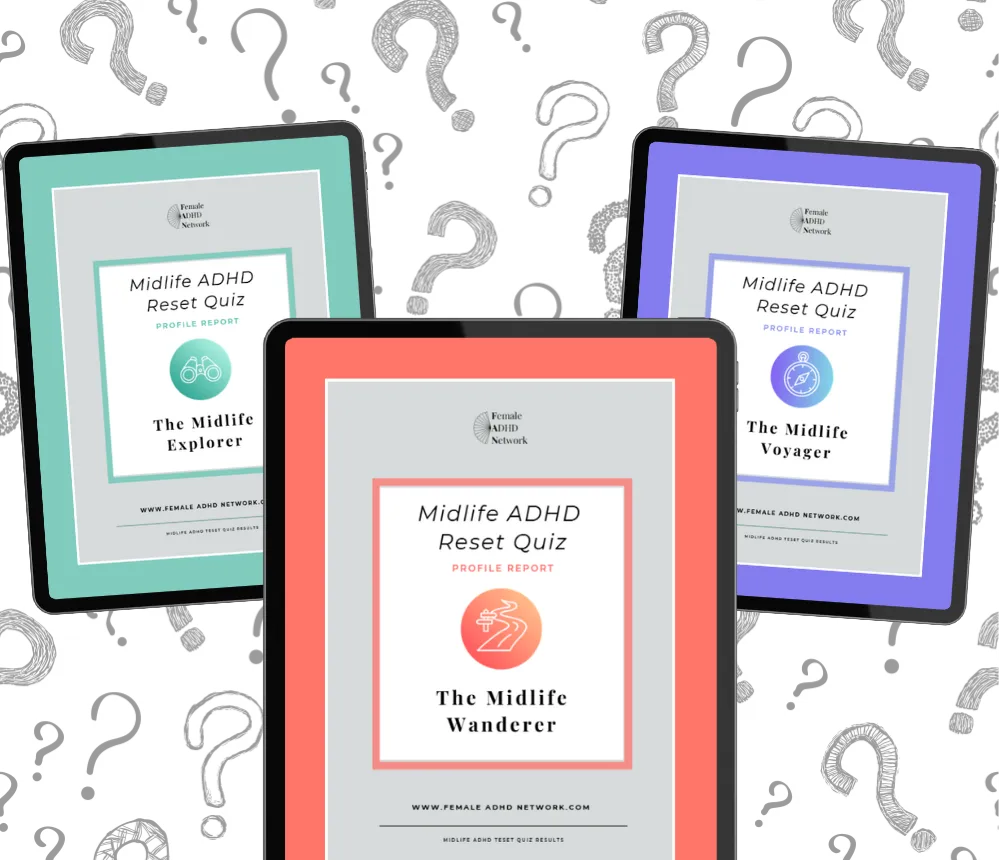
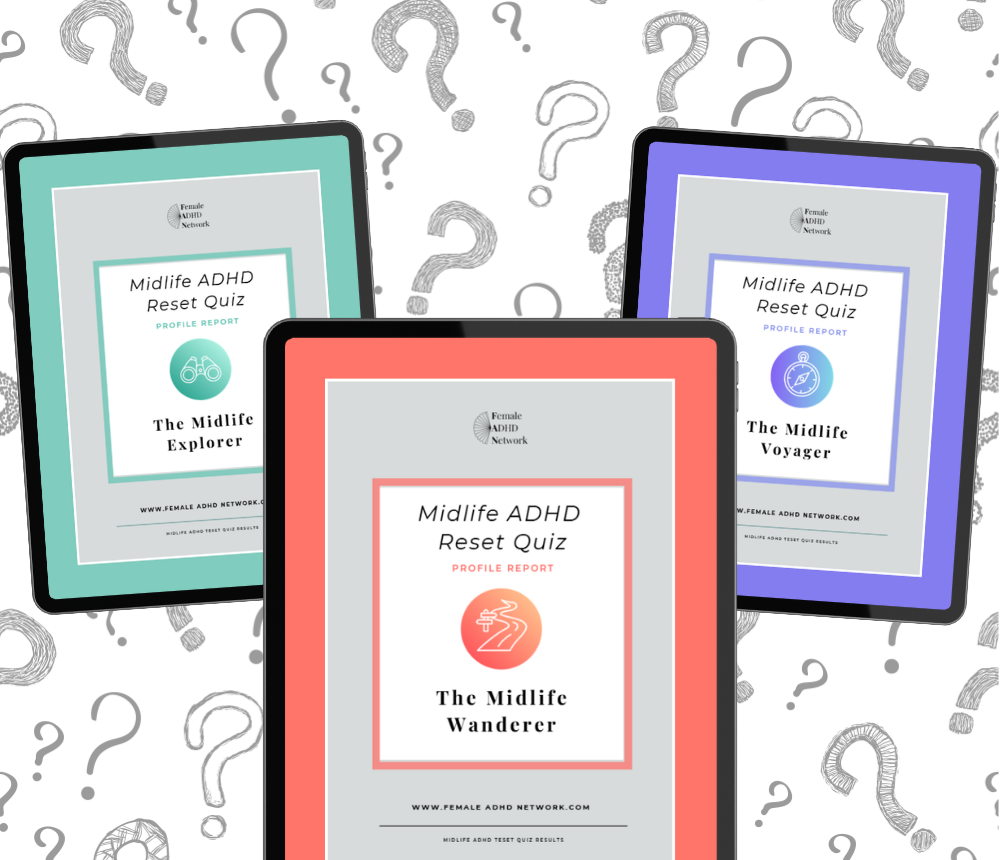
The MAP Quiz takes five minutes and shows you your own Midlife ADHD Profile, plus next steps that actually fit where you are right now.
My Own Midlife Tipping Point
I was diagnosed with ADHD at 52, after experiencing my own midlife tipping point.
It crept up slowly over a few months, mainly due to an ongoing family issue. At the same time, I was looking after the home, holding down a demanding career, and found myself still taking on more.
My anxiety levels soared, and I felt as though every part of my life was beginning to unravel. I sought medical advice, and although I broached the possibility of ADHD, it was dismissed, and I was prescribed medication for anxiety instead.
So I did what I'd always done, and worked even harder. Things finally came to a head over the Christmas period, when my lifelong tendency to over-commit and leave things until the last minute proved to be the final straw. Sound familiar?
I could barely function or think straight. The simplest tasks felt like climbing Everest in flip-flops. I was signed off work by the doctor and used the time to completely rest, something quite alien to me. I didn't have a choice, I'd ground to a halt.
Over time, I started researching ways to recover, and to prevent myself reaching burnout again. That's when I discovered the impact of hormone fluctuations on ADHD symptoms. Knowing there was a reason changed everything. I was initially annoyed it had been missed for so long, but also relieved I wasn't losing my mind.
The biggest breakthrough wasn't more discipline. It wasn't another planner. Or another productivity book. It was finally understanding my own brain.
So now, instead of rushing into things first thing in the morning, I go for a walk or do a bit of yoga, and always try to meditate and practice some breathing exercises.
I also decided to find a new balance and moved away from my demanding corporate job to pursue a new career as an ADHD Coach & Programme Leader, and my passion to help other women find the support I was looking for but couldn't find.
I'm also much more realistic about what I can do, and I've discovered that I can actually say no when I have to.
None of that happened by accident. It came from a handful of deliberate shifts, the same ones that can help you break the cycle too, before it breaks you.
Breaking The Burnout Cycle
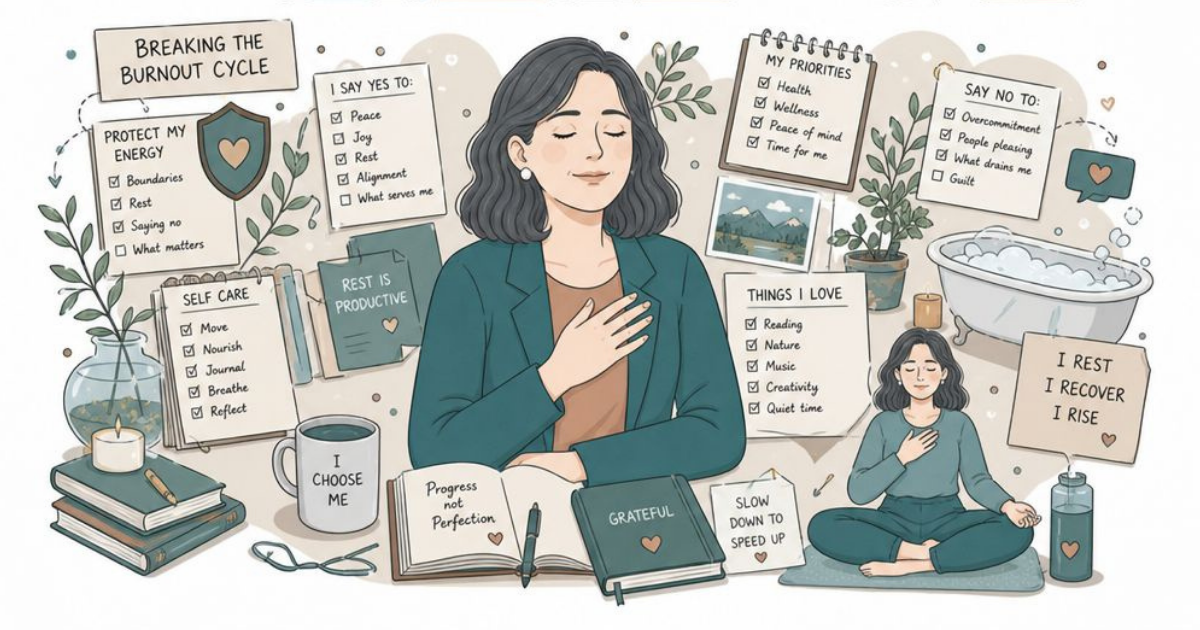
Breaking the cycle so it doesn't happen again, isn't about trying harder or finding a better system. Here's what actually helps:
Learn your warning signs:
Recognising what stress or burnout looks like for you, the physical or emotional signs, behaviours or habits that signal you're overwhelmed.
Mine were brain fog, snapping at the people I loved most, and feeling overwhelmed by tiny decisions... like choosing a birthday card.
Yes really!
Rest before you earn it:
Think of self-care and rest as maintenance, not a reward. Rest doesn't need to be earned by finishing the list first, because for an ADHD brain, there is rarely time left over. It's safe to rest. Whatever you did today is enough.
Protect your energy:
Learning to say no without a lengthy explanation protects the energy you have left. It can feel disproportionately hard when you're used to being the reliable one. Every yes that drains you is a no to something that would have sustained you.
Final Thoughts
For years I believed the answer was trying harder.
Now I know the answer is something very different.
Understanding.
Support.
Self-compassion.
Permission to stop carrying everything on your own.
And finally ... the courage to believe that your worth was never measured by how much you could carry.
If you've been running on empty...
Maybe today isn't the day to push harder.
Maybe it's the day to be a little kinder to yourself.
I hope this post has helped you understand why midlife women with ADHD are more susceptible to burnout, and that it's not that you're not coping, it's that demand outpaced capacity, quietly, over time.
I'd love to know: if this lands with you and whether you've had a similar experience of overwhelm or burnout in midlife, or anything else you'd like to share in the comments.
Clare 💫
A gentle note: this post combines personal experience with general information about ADHD in midlife. It isn't intended to diagnose or replace professional medical advice. If any of this resonates with you, a conversation with your GP could be a helpful first step.
Want More Support?
Not sure where you're starting from? The free MAP Quiz shows you your profile — Wanderer, Explorer or Voyager — in under 5 minutes.Take the quiz
Ready to break the cycle for good and create a midlife that finally feels like you? Click hereto learn more about my Midlife ADHD Reset course.