Making Sense Of A Late ADHD Diagnosis In Midlife
Over the past week, ADHD has been everywhere.
A Channel 4 documentary, The Great ADHD Myth?, presented by an NHS psychiatrist and questioning whether ADHD is a genuine medical condition at all, has caused a real storm. A charity has formally complained to Ofcom. The Royal College of Psychiatrists issued a statement. One of the programme's own contributors has reportedly withdrawn support since it aired.
Did you watch it? I did.
So many people have already responded, including medical experts in the field, you can find learn more just by searching the internet.
So rather than cover the same ground again, I wanted to look at it through the lens of women with ADHD.
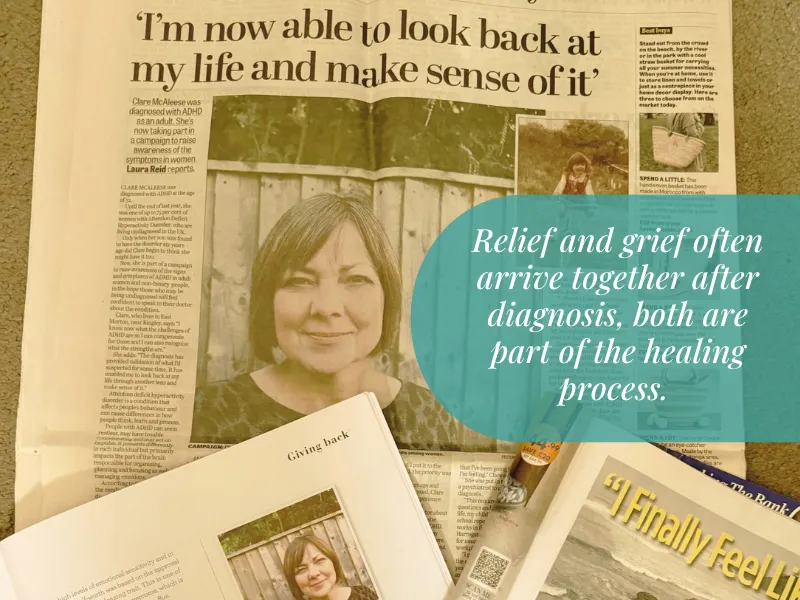
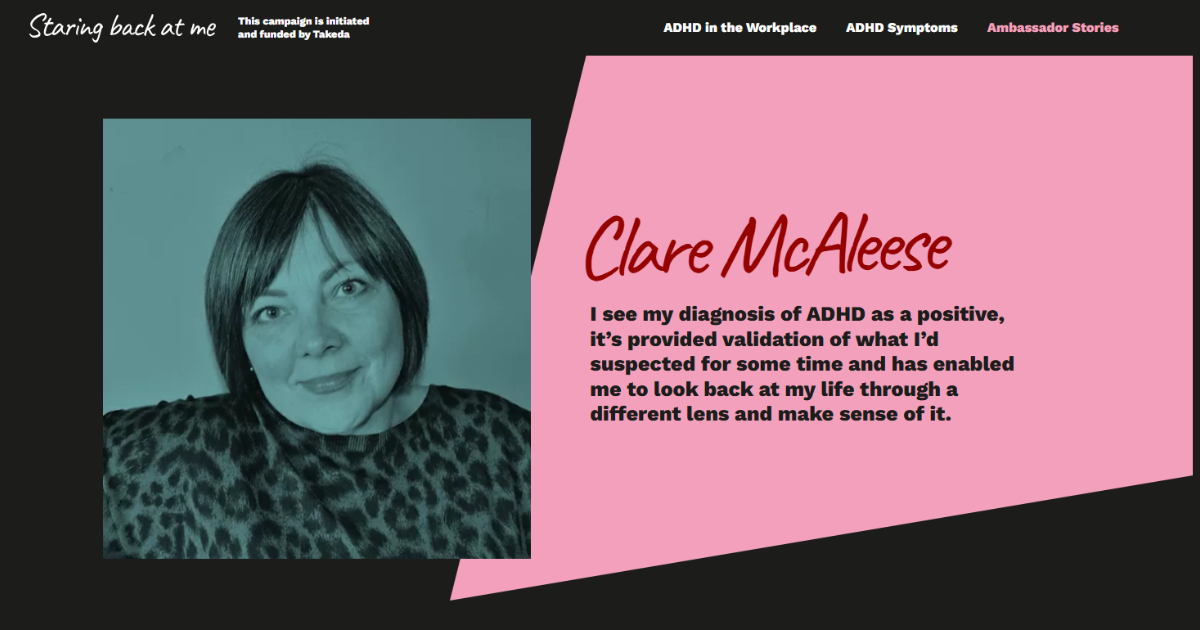
At the same time, this week's conversations took me back to my own involvement in the Staring Back At Me campaign, where I was one of eleven ambassadors who received an ADHD diagnosis later in life, sharing our stories to help other women recognise the symptoms in themselves and start conversations with their own doctors.
This led to national press coverage, and I like to think it played its own small part in someone else's lightbulb moment.
This week reminded me just how many women are still at the very beginning of that journey.
Whether you've recognised yourself in a documentary, a campaign, a conversation with a friend, or you've only just begun wondering if ADHD might explain your own experience, this article is for you.
We'll cover what late diagnosis actually is and why it happens so often, who it affects and why women in particular are missed, why it matters, including what this week's documentary got so wrong, and how to make sense of it yourself, wherever you're starting from.
Key Takeaways
🔑 ADHD in women is still widely underdiagnosed, and masking is one of the biggest reasons why.
🔑 Midlife hormonal changes can intensify ADHD symptoms that were manageable for decades, which is why so many diagnoses happen later in life.
🔑 Relief and grief often arrive together after diagnosis, and both are part of the healing process.
🔑 A television programme questioning whether ADHD is real doesn't make your experience any less true.
🔑 You don't need a diagnosis in hand to start making sense of your own story.
Why So Many Women Are Diagnosed With ADHD Late In Life
Built On The Wrong Research
Much of what most people think they know about ADHD comes from research built on hyperactive young boys, the loud, disruptive, hard-to-miss presentation. Girls were, and still are, far more likely to show inattentive symptoms instead: daydreaming, difficulty concentrating, forgetfulness, always running late, told simply to try harder.
Masking
Over time, many of us learn to mask those difficulties instead of getting support for them, blending in, overcompensating, striving for perfection. Masking, the effort to appear "normal" by concealing or working around your symptoms, is one of the biggest reasons ADHD goes unrecognised in women for so long.
It has real costs. It uses up enormous mental energy that could go toward actually functioning. It creates a gap between how you appear and how you actually feel, which is exhausting in its own right. On the outside, I looked like I was holding everything together, a successful corporate career, raising a family, always busy. Inside, I was exhausted. I masked my struggles for years, pushing through with willpower and self-criticism, until burnout, anxiety and the constant pressure to perform eventually caught up with me.
Hormones And Midlife
There's also a hormonal piece. Oestrogen affects dopamine regulation, and the natural hormonal shifts of perimenopause can reduce dopamine efficiency, sometimes making previously manageable ADHD symptoms suddenly much harder to manage. The constant juggling, combined with my own hormonal rollercoaster, left me feeling like I was running uphill just to keep up, and many women are diagnosed only once demands and capacity stop lining up the way they used to, often around midlife.
Misdiagnosed As Anxiety Or Depression
Many women receive a diagnosis only after years of being treated for something else entirely, usually anxiety or depression. And it's easy to see why. A woman who's chronically overwhelmed, who ruminates over forgotten tasks, who feels ashamed of her own disorganisation, looks, on the surface, a lot like someone with generalised anxiety. She may well also have anxiety. But if that anxiety is being driven by unmanaged ADHD rather than being the root cause itself, treating the anxiety alone never actually touches what's underneath it.
When I first raised the possibility of ADHD with my own GP, I was offered anti-depressants instead. I contacted the ADHD Foundation, initially for my son, but also to find out more for myself, and had a QB Test, which came back "highly likely." About a year later, I was formally diagnosed by a private psychiatrist. At 52, everything finally made sense.
The Moment It Finally Clicks
Many women also only recognise themselves once a child is assessed, or once the demands of daily life finally outpace years of quiet compensation. Both of those, together, were the reason the penny finally dropped for me.
Afterwards, I found my old school reports. Easily distracted and lacks focus. Takes too long to settle down. Not achieving potential. It had all been there, decades earlier, just never named.
None of this means ADHD is rare in women. It means it's been consistently harder to see.
Why This Matters, Especially This Week
The Channel 4 documentary featured a panel of sceptical experts arguing ADHD isn't a genuine medical condition, built around a single young boy taken off his medication as part of the programme. Here's the detail that's easy to miss: the show's own end credits revealed he later went back on his medication, and his schoolwork improved. The programme's own evidence contradicted its own argument. They aired it anyway.
Not one adult woman with ADHD featured in it, anywhere.
If you've read anything else on this blog, you already know why that matters. Research and media narratives about ADHD are still overwhelmingly built around how it looks in boys. Women, especially women who've spent decades masking it well enough to look "fine," don't fit that picture, so we don't get a seat at the table, not in research, not in diagnosis, and apparently not even in a documentary supposedly about the whole condition.
This isn't just an online argument either. Scepticism like this has real consequences: women deciding whether an assessment is even worth pursuing, GPs feeling emboldened to dismiss what they're hearing, a whole generation of undiagnosed women getting one more reason to doubt themselves. If this week's headlines made you doubt yourself, that doubt isn't evidence you're wrong.
Initially, that's exactly what I worried about, all the progress made in raising awareness, undone in an hour.
I'm pleased to say I think it actually had the opposite effect. You only have to look online to see the scale of the backlash, from medical experts, men and women alike. One of the programme's own contributors, whose input was reportedly heavily edited, has since withdrawn support.
Making Sense Of Your Diagnosis
Understanding your diagnosis isn't about collecting another label. It's about finally understanding yourself, and gently starting to build a life that works with your brain instead of constantly fighting against it.
I felt relief, real relief, when my own answer finally came. I also grieved, for the years spent believing I simply wasn't trying hard enough. Both were true at once, and neither cancelled the other out. A few honest things worth knowing:
💟 Relief and grief can both be true at the same time. Neither one cancels the other out.
💟 You don't need a diagnosis in hand to start making sense of your own patterns, suspecting is a legitimate place to begin.
💟 Don't rush the timeline. There's no correct number of weeks to feel sad before you're "supposed to" feel grateful.
If this week's documentary made you question yourself, or you're only just beginning to wonder whether any of this explains your own story....
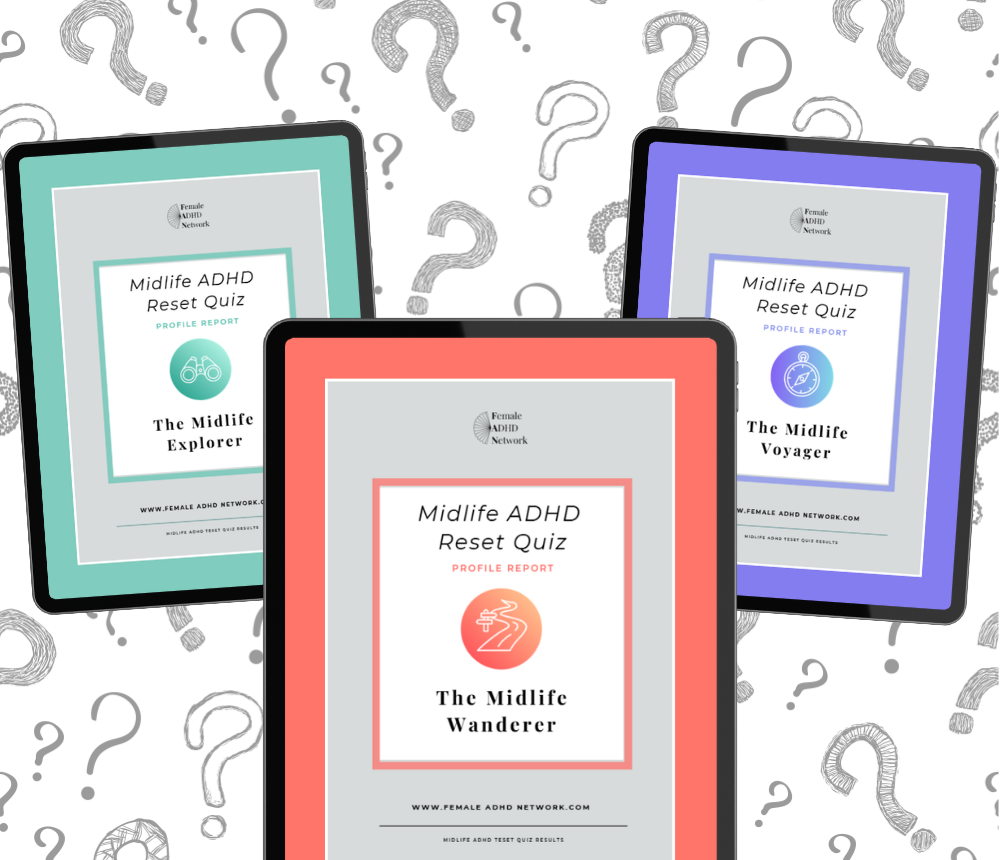
The MAP Quiz takes five minutes and shows you your own Midlife ADHD Profile, plus next steps that actually fit where you are right now.
Why Diagnosis Can Be An Opportunity For Transformation In Midlife
Now, I'm on a mission to make sure you don't have to figure this out alone.
This isn't about fixing yourself or fitting into someone else's mould. It's about creating a midlife that finally works with your ADHD brain, so you can feel calm, capable and confident about your next chapter.
I wasn't the only one who felt this. The other women I stood alongside in the Staring Back At Me campaign described the same thread running through their own stories, years of quietly compensating, then a diagnosis that didn't just explain the past, it opened up a completely different way of thinking about what comes next. For some, it was learning to trust themselves again. For others, it was finally giving themselves permission to need a different kind of support, without apologising for it.
For me, it became something I couldn't have predicted at the time, a whole new career, and this community.
That's exactly why I built the Midlife ADHD Reset, not another productivity system, and not one more reason to blame yourself, but real, structured support for turning understanding into an actual life that fits who you are now.
Final Thoughts
Receiving an ADHD diagnosis doesn't change your past. But it can completely change the story you've been telling yourself about it.
That matters, because shame keeps us stuck. Understanding helps us move forward.
If you've found yourself grieving, please know this. You're not grieving because you're broken. You're grieving because you've finally realised you never were.
And whatever this week's headlines said, your experience is still real. It doesn't become less true because a channel found four sceptical experts and one boy to build an hour around.
Perhaps that's where your next chapter really begins.
I'd love to know: did you watch the documentary, and how did it land for you? Or, if you could speak to your younger self for one minute, what's the one thing you'd want her to know?
Clare 💫
A gentle note: this post combines personal experience with commentary on a recent broadcast and general information about ADHD in women. It isn't intended to diagnose or replace professional medical advice. If any of this resonates with you, a conversation with your GP could be a helpful first step.
Want More Support?
I created the Female ADHD Network and Midlife ADHD Reset™ to make sure you don't have to figure this out alone. Not another productivity system. Not another reason to blame yourself. Just a little more understanding, and a life that finally works with your brain instead of against it.
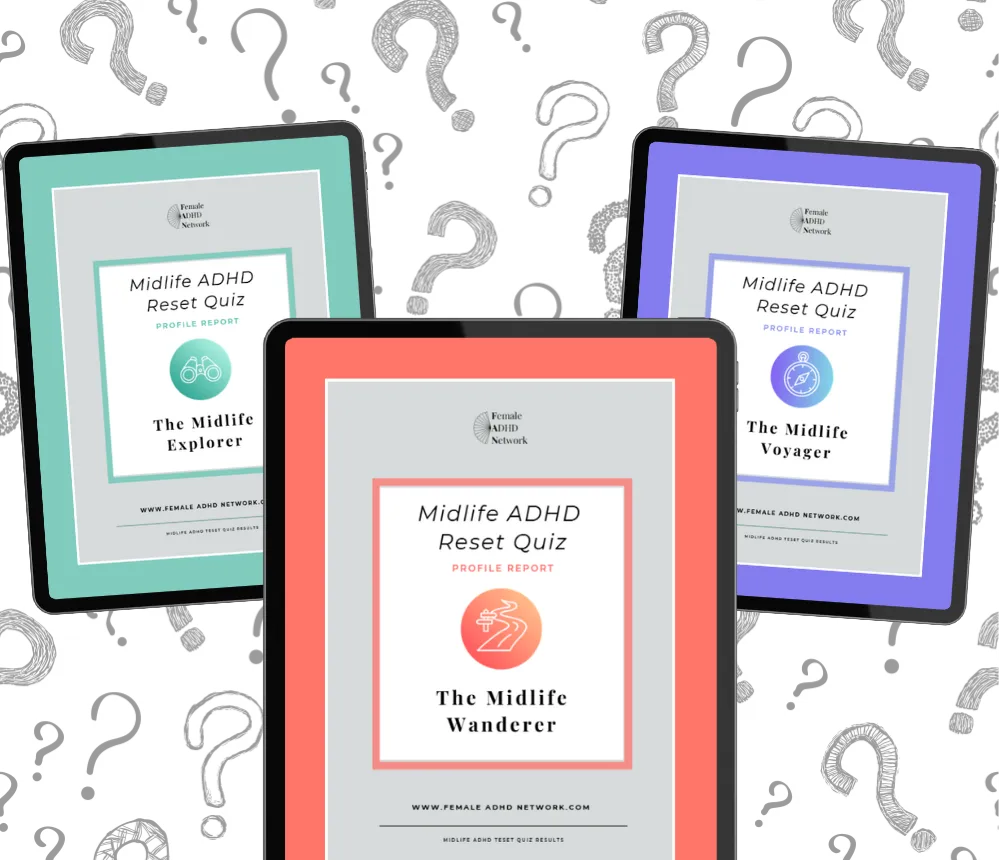
Not sure where you're starting from? The free MAP Quiz shows you your profile, Wanderer, Explorer or Voyager, in under 5 minutes.
Ready to build a midlife that finally feels like you?
Click here→ to learn more about my Midlife ADHD Reset course.