Why Productivity Advice Fails Midlife Women With ADHD
"I just need to get more organised."
I can't tell you how many times I've said this to myself. Maybe you have too?
You start with the very best intentions.
Perhaps you bought a shiny new planner. Downloaded yet another productivity app. And promised yourself that this would be the one that finally works.
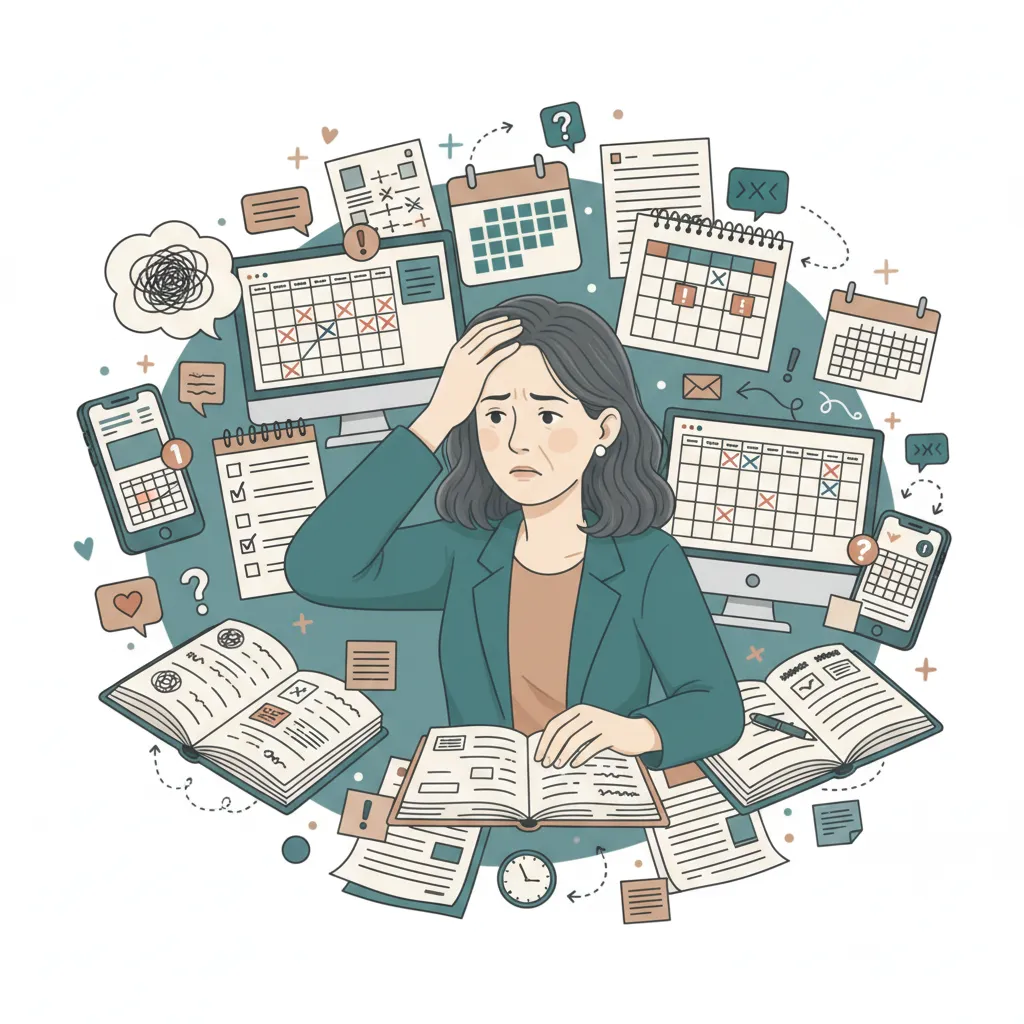
But somehow, a few weeks down the line, you're back at square one, overwhelmed, on the back foot, and wondering why keeping on top of daily life feels so much harder for you than anyone else you know.
If this sounds familiar, I want you to know something.
It isn't because there's something wrong with you, or that you lack discipline.
And it certainly isn't because you're lazy, you never stop.
As a fellow midlife woman and lifelong ADHD'er, I now understand something I wish I'd known years ago.
The problem was never me. It was the systems I was trying to force myself into.
It Was Never A Discipline Problem
Most productivity advice is built around linear thinking, the idea that you'll remember what needs doing, decide where to start, stay focused until it's finished and then move smoothly on to the next task.
For many women with ADHD, those aren't simple skills. They're part of something called executive functioning.
Executive functioning is the brain's management system. It helps us plan, prioritise, organise, switch between tasks, manage time and hold information in our working memory. When ADHD affects these functions, everyday life requires far more mental effort than people on the outside realise.
Then midlife arrives and creates the perfect storm, caring for parents and children at the same time, whilst still holding down a job and managing the household.
As oestrogen begins to decline during perimenopause and menopause, dopamine levels can also be affected. Dopamine plays an important role in attention, motivation and executive functioning, the very systems ADHD already challenges. Most productivity advice assumes your brain naturally remembers, prioritises and filters information without much conscious effort. An ADHD brain doesn't always work like that, and once dopamine drops too, the coping strategies that used to just about work suddenly don't.
"I used to just about cope… then suddenly everything fell apart."
The ADHD wasn't new.
The invisible support your hormones had been providing was changing.
Suddenly, the strategies that had kept everything held together for years no longer worked quite so well.
And because nobody explained why…
Many women blamed themselves.
It's no wonder so many women reach their forties or fifties feeling as though everything has become harder almost overnight. Not because ADHD appeared. Because life finally became too heavy to carry using the same coping strategies.
The Shame We've Been Carrying
Most women with ADHD reach midlife believing they should have figured life out by now.
Over the years we've quietly collected a long list of things we wish we'd done differently.
Missed appointments.
Forgotten birthdays.
Abandoned projects.
Half-finished planners.
The constant feeling that everyone else seems to cope better.
The frustrating thing is…
It isn't because we don't care.
Quite the opposite.
Most ADHD women care deeply. We desperately want to remember. To be organised. To follow through.
So we work harder. We overcompensate. We hide how difficult things really feel.
And eventually we start believing the story that maybe we're simply not trying hard enough.
I believed that story for years.
Many women with ADHD have unknowingly created their own systems and strategies to navigate the challenges they face, whether they realise they're ADHD-related or not.
On the surface, it may look like you're functioning. But underneath, you're masking, and while you may have managed to get away with it for decades, the coping strategies you've always relied on start to crumble, and it can feel like the ground has shifted beneath you. What's easy to miss is that this isn't a personal failing: everything has simply converged in midlife to create the perfect storm.
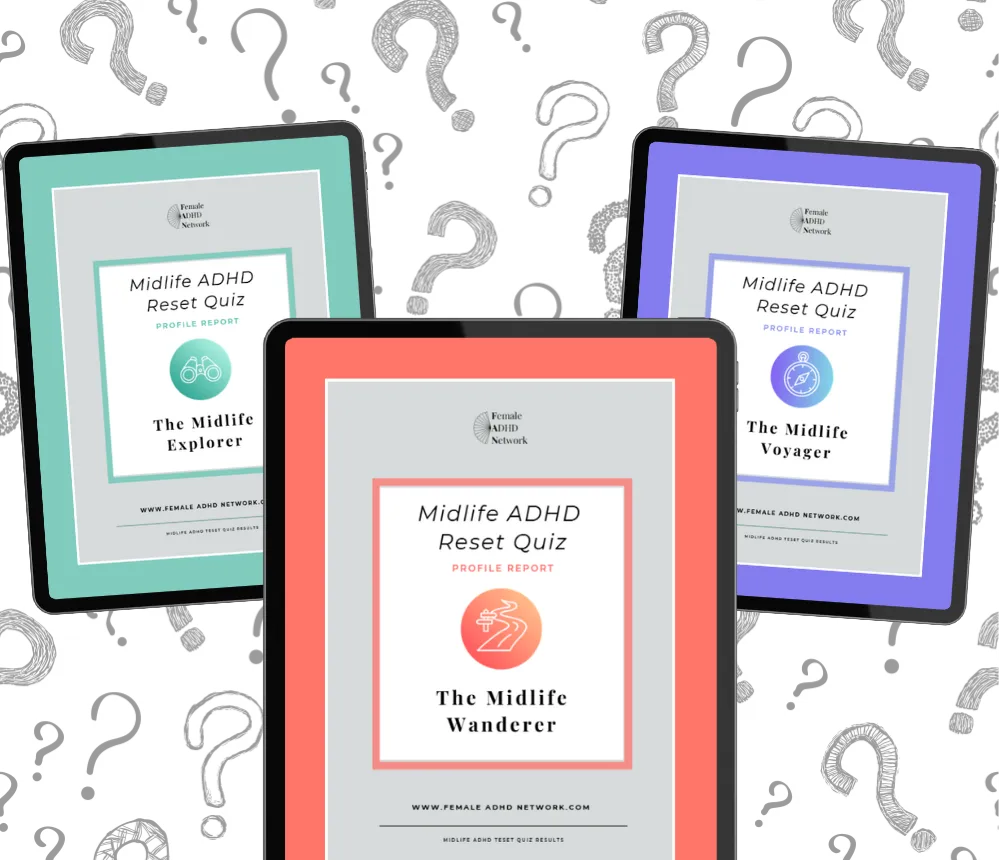
If any of this feels familiar, you don't have to keep guessing. The MAP Quiz takes five minutes and shows you your Midlife ADHD Profile, Wanderer, Explorer or Voyager, plus next steps that actually fit you.
My Shift From 'Trying Harder' To 'Trying Differently'
For years I thought I needed more willpower. More motivation. Better habits. A stricter routine. Another colour-coded planner. Another productivity book. But none of those things addressed the real problem.
The biggest breakthrough was not more discipline. It was understanding more about my brain, how it works differently, and that ADHD is not a disorder of knowing what to do, it's knowing how to do it.
I decided to stop relying on the 'belt and braces' coping strategies that crumbled in midlife, and create more reliable systems to externalise my working memory and executive function skills.
I needed what I now think of as…
A second brain.
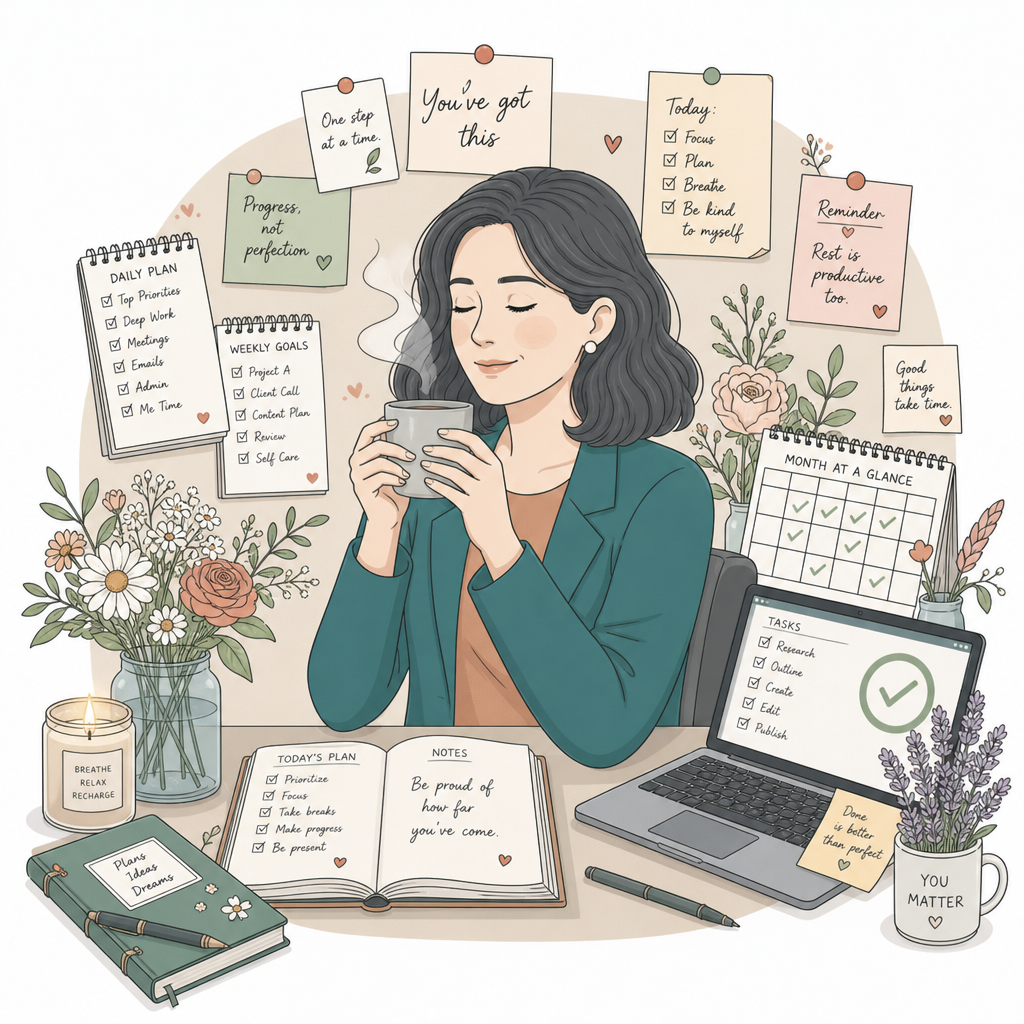
Not another planner, app or notebook. Not another impossible system to maintain. But a simple way to help my brain remember, prioritise and organise the things it was never designed to hold all at once.
That might mean…
●Visual reminders instead of trying to remember everything.
●Checklists instead of mental lists.
●Calendars that prompt you before you need them.
●Routines that remove decisions.
●Automations that quietly do the remembering for you.
None of that is cheating. It's the scaffolding your brain needs to navigate the challenges.
Midlife Starts To Feel Lighter
One of the biggest myths I carried was believing consistency should look effortless.
It doesn't.
Not for many women with ADHD.
Some weeks you'll have more capacity than others. Some systems will stop working and need adjusting. That isn't failure. That's simply life with an ADHD brain.
The goal was never to become perfectly organised.
The goal is to reduce friction.
Reduce mental load.
Create breathing room.
And perhaps, for the first time in years, stop fighting against the way your brain actually works.
You Don't Need More Discipline
You need kinder systems.
And that's exactly why I created the MAP Quiz.
In just a few minutes you'll discover your Midlife ADHD Profile and receive practical ADHD-friendly next steps tailored to where you are right now.
Because understanding your brain is the beginning.
Building a life that works with it is where things really start to change.
Key takeaways
🔑 Struggling to plan, prioritise and follow through isn't laziness, it's executive functioning, and ADHD affects it directly.
🔑 Declining oestrogen in perimenopause and menopause affects dopamine too, which is why coping strategies that worked for years can suddenly stop working.
🔑 Most productivity advice assumes a brain that remembers, prioritises and filters automatically. An ADHD brain doesn't always work that way.
🔑 The shift that changes everything isn't more discipline, it's building a 'second brain' that externalises what your brain was never designed to hold alone.
🔑 Consistency doesn't have to look linear. Capacity fluctuates, and that's simply life with an ADHD brain, not failure.
I hope this post has helped you understand more about ADHD and that it's not that you got worse at life, it's that demand overtook capacity in midlife, all at once. That's a very different story from the one you've probably been telling yourself. It's the story I told myself for years, too.
I'd love to know: your own shift, if and how ADHD impacts you in midlife, or anything else you'd like to share in the comments.
Clare 💫
A gentle note: this post combines personal experience with general information about ADHD in midlife. It isn't intended to diagnose or replace professional medical advice. If any of this resonates with you, a conversation with your GP could be a helpful first step.
Want More Support?
Not sure where you're starting from? The free MAP Quiz shows you your profile — Wanderer, Explorer or Voyager — in under 5 minutes. Take the quiz
Ready to create a midlife that finally feels like you? Click here to learn more about my Midlife ADHD Reset course.